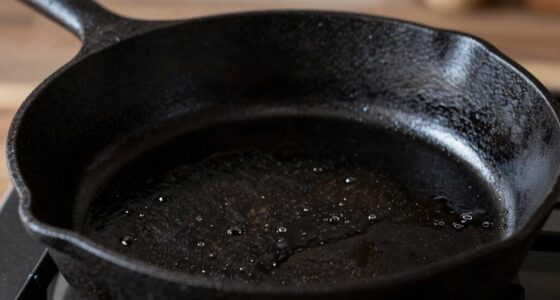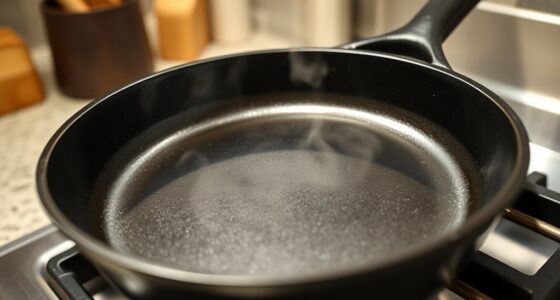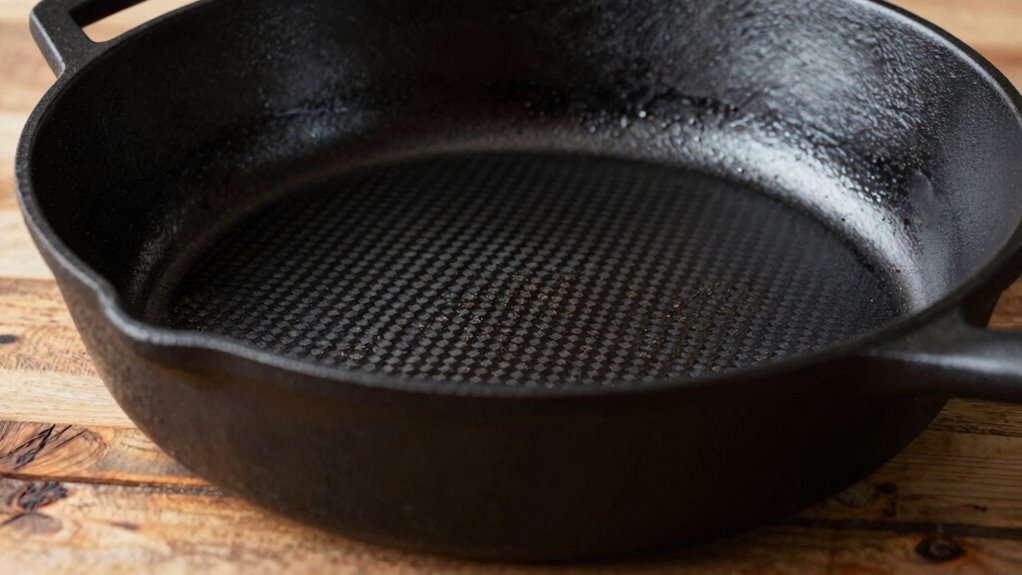

To season a carbon steel pan faster than cast iron, focus on proper technique: gradually heat the pan, apply a thin, high-smoke-point oil, and heat until it smokes to build up a durable, non-stick layer quickly. Regular use with fats like bacon or eggs deposits more seasoning over time. Consistent cleaning, oiling, and proper maintenance speed up the process. Keep going for more proven tips on developing that perfect non-stick surface efficiently.
Key Takeaways
- Carbon steel heats quickly and responds faster to temperature changes than cast iron, speeding up seasoning development.
- Proper cooking techniques, like heating oil until smoking, promote rapid polymerization for faster seasoning buildup.
- Regular use with fats such as bacon or eggs deposits seasoning layers more efficiently than cast iron.
- Proper cleaning and maintenance prevent rust, allowing seasoning layers to develop and stabilize faster.
- The lighter weight and better heat responsiveness of carbon steel enable more consistent heating, accelerating seasoning progress.
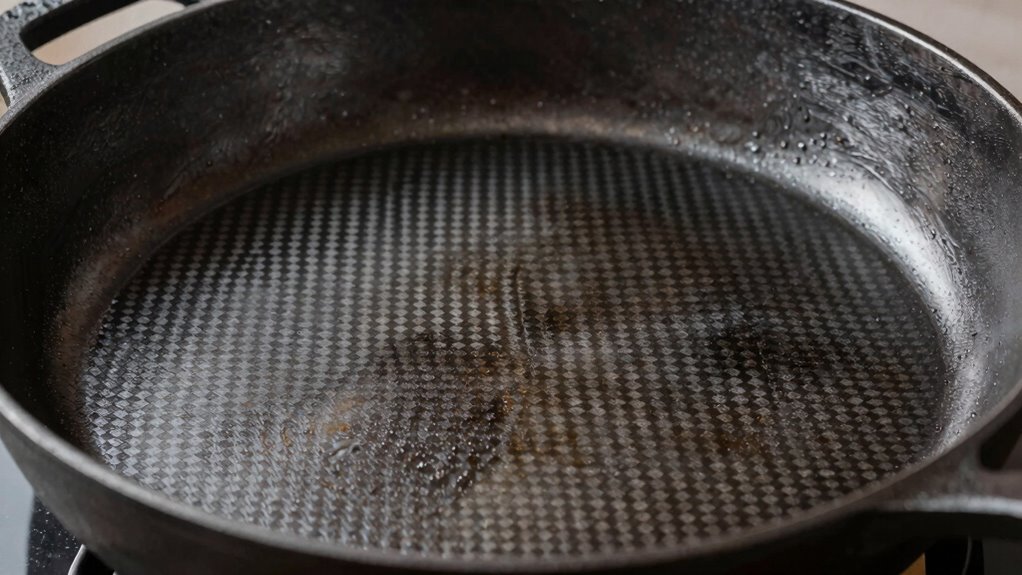
Have you ever wondered why seasoned carbon steel pans develop that smooth, non-stick surface? It’s a combination of proper cooking techniques and consistent maintenance tips that build up a durable seasoning layer. Unlike cast iron, carbon steel heats up quickly and responds swiftly to temperature changes, so mastering these aspects can help you speed up the seasoning process. When you cook with your pan, especially using fats and oils, you’re essentially building a polymerized layer that bonds to the metal, creating that desirable non-stick finish. This means that every time you cook, you’re reinforcing and refining the seasoning, making your pan more non-stick over time.
Seasoned carbon steel pans develop a non-stick surface through proper cooking techniques and regular maintenance.
To achieve a good seasoning layer faster than cast iron, focus on the right cooking techniques. Start by heating your pan gradually to avoid warping, then add a thin layer of oil with a high smoke point—such as flaxseed, grapeseed, or vegetable oil. Spread the oil evenly across the surface using a paper towel, and then heat the pan over medium-high heat until the oil begins to smoke. This process, known as polymerization, creates a hard, shiny coating that improves with each use. Repeating this process several times accelerates the development of that smooth, non-stick surface.
Maintaining your carbon steel pan is just as vital as seasoning it initially. After each use, clean it with hot water and a stiff brush or sponge—avoid soap, which can strip away the seasoning. If food sticks stubbornly, simmer some water in the pan for a few minutes to loosen it before scrubbing. Once clean, dry the pan thoroughly to prevent rust. Applying a light coat of oil before storing helps maintain the seasoning and prevents moisture from causing corrosion. Regular use and proper maintenance tips like these build up the seasoning layer faster and keep it in prime condition.
Another tip for speeding up the seasoning process is to cook with fats that polymerize well, such as bacon or fried eggs, which deposit additional layers of seasoning with each cooking session. The more you cook with your pan, the more seasoned it becomes, and the faster it develops that perfect non-stick surface. Remember, patience and consistency are key—by following proper cooking techniques and maintenance tips, you’ll see your carbon steel pan’s seasoning develop more quickly than you might expect. With time, your pan will become a reliable tool that improves with each use, making every meal a little easier to cook and clean.
Frequently Asked Questions
Can Carbon Steel Pans Be Used on Induction Cooktops?
Yes, carbon steel pans are induction compatible because of their magnetic properties. You can confidently use them on induction cooktops, as they work well with magnetic fields generated by the stove. Just verify your pan has a flat bottom for even heat distribution. Due to their excellent induction compatibility, carbon steel pans heat quickly and efficiently, making them a great choice for your cooking needs.
How Often Should I Re-Season My Carbon Steel Skillet?
Think of your skillet as a trusted friend that needs regular visits to stay in top shape. You should re-season your carbon steel skillet every few months or when you notice food sticking or dull spots. Proper maintenance tips, like cleaning without soap and applying a thin oil layer after each use, keep the seasoning vibrant. Regular seasoning frequency guarantees your pan stays non-stick and durable for years of cooking adventures.
Is It Safe to Cook Acidic Foods on Seasoned Carbon Steel?
Yes, it’s safe to cook acidic foods on seasoned carbon steel, but keep in mind that acidic foods can influence seasoning durability over time. They may cause the seasoning to break down faster, so you might need to re-season more frequently. To protect your skillet and maintain safety, avoid prolonged cooking of highly acidic dishes and ensure your seasoning is well-established before tackling acidic recipes.
What’s the Best Way to Remove Rust From Carbon Steel?
To remove rust from carbon steel, start by scrubbing it with steel wool or a stiff brush to loosen the rust. For stubborn spots, use a mixture of baking soda and water or a vinegar soak. After removing rust, thoroughly dry the cookware and apply a light coating of oil to prevent future rust. Regular rust removal and proper seasoning help guarantee your carbon steel stays rust-free and maintains peak performance.
Can I Use Soap to Clean My Carbon Steel Pan?
Yes, you can use dish soap for pan cleaning your carbon steel pan. It’s safe to do so, especially for routine cleaning, and helps remove food residue without damaging the seasoning. Just use a small amount of dish soap, scrub gently with a sponge or brush, and rinse thoroughly. After cleaning, dry the pan completely and apply a light coat of oil to maintain the seasoning and prevent rust.
Conclusion
Now that you know how carbon steel seasons faster than cast iron—up to 3-4 times quicker—you can enjoy a well-seasoned pan in less time. Did you know that a properly seasoned carbon steel skillet can develop a non-stick surface in just a few days, compared to weeks for cast iron? So go ahead, give your pan a proper seasoning routine, and reap the benefits of quicker, more efficient cooking with a durable, non-stick surface.

LAPGEAR Home Office Pro Lap Desk - Black Carbon, Fits 15.6” Laptops
- Spacious Surface: Fits laptops up to 15.6 inches
- Additional Accessories Space: Extra room for accessories
- Built-in Mouse Pad: 5x9 inch precision tracking area
As an affiliate, we earn on qualifying purchases.