When choosing between flat and conical burrs for your espresso grinder, consider your priorities. Flat burrs produce very uniform grounds and are great if you want precise extraction, but they can generate more heat and require regular cleaning. Conical burrs run quieter, generate less heat, and handle a wider range of grind sizes easily, making maintenance simpler. To discover which type suits your brewing style best, explore the details further below.

Get your next haul delivered free with Prime
- Fast, free delivery on millions of items
- Prime Video, Amazon Music and more included
- Member-only deals all year
Key Takeaways
- Flat burrs produce a uniform grind size ideal for precise espresso extraction.
- Conical burrs generate less heat, helping preserve delicate coffee flavors.
- Flat burrs may require more frequent cleaning due to oil buildup and residue.
- Conical burrs are typically quieter and easier to maintain with less clogging.
- Both burr types need regular cleaning and inspection for optimal performance and longevity.
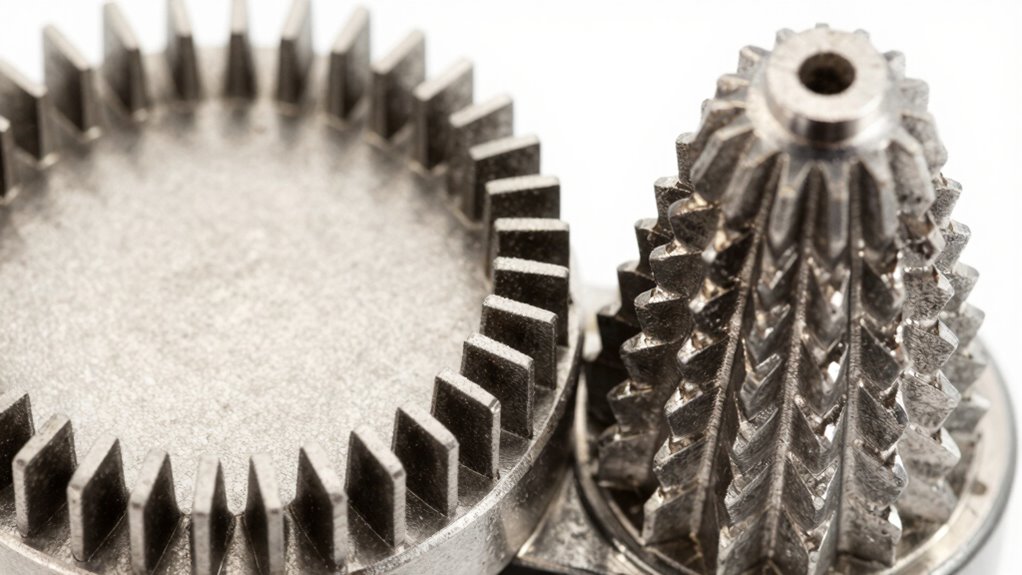
If you want consistently great espresso, paying attention to your grinder’s burrs is vital. The burrs are responsible for grinding your beans to the right size, directly impacting grind consistency and, ultimately, flavor. When your grind isn’t uniform, you’ll notice uneven extraction, which can lead to sour or bitter shots. To keep things running smoothly, it’s imperative to understand the differences between flat and conical burrs and adopt proper maintenance tips. Regularly checking grind size consistency can help identify issues early before they affect your espresso quality. Flat burrs sit parallel to each other, creating a flat grinding surface. They tend to produce a very uniform grind size because the beans are crushed evenly as they pass through the burrs. This consistency is a major advantage if you’re aiming for precise extraction. However, flat burrs can generate more heat during grinding, which might affect the coffee’s flavor if not managed properly. Regular maintenance tips include cleaning the burrs to prevent buildup of coffee oils and residue, which can cause inconsistent grind size over time. You should check for wear and tear periodically, as dull burrs can compromise grind consistency, requiring replacement to restore peak performance.
Conical burrs, on the other hand, are cone-shaped and sit inside a matching cone-shaped burr. They tend to produce less heat and are often quieter in operation. Because of their design, conical burrs handle a broader range of grind sizes, making them versatile for different brewing methods. They also tend to retain less heat, helping preserve the coffee’s aroma and flavor. When it comes to maintenance tips, conical burrs require similar care: regular cleaning and inspection for wear. Due to their design, they may be less prone to clogging and easier to clean, but neglecting routine maintenance can still lead to grind inconsistencies and flavor degradation. Both types of burrs have their advantages and drawbacks, but what matters most is how well you maintain them. No matter which style you choose, implementing a consistent cleaning schedule and inspecting the burrs regularly will guarantee your grinder produces a steady, uniform grind. This, in turn, guarantees a more predictable extraction and better espresso shot every time. Remember, investing time in proper maintenance tips doesn’t just extend the life of your burrs; it directly impacts the quality of your espresso. By staying vigilant with cleaning and replacing worn parts as needed, you’ll keep your grinder performing at its best and savor those perfect shots day after day.
espresso grinder burrs flat conical
As an affiliate, we earn on qualifying purchases.
As an affiliate, we earn on qualifying purchases.
Frequently Asked Questions
How Do Burr Material Differences Affect Grind Quality?
Burr material differences directly impact grind consistency and material durability. Harder materials like steel or ceramic resist wear longer, maintaining consistent grind quality over time. Softer materials may wear faster, leading to uneven grinds and affecting flavor. You’ll want to select burrs made from durable materials to guarantee consistent extraction and longevity, especially if you brew frequently. Ultimately, the right material helps you achieve a steady grind and better espresso shots.
Which Burr Type Is Easier to Clean and Maintain?
You’ll find conical burrs easier to clean and maintain because they generally have fewer crevices, reducing cleaning challenges. Flat burrs, with their complex design, often trap grounds and require more effort to keep spotless. While conical burrs might need occasional maintenance, they’re more user-friendly for daily cleaning. If you want simplicity and less fuss, conical burrs are your best bet for hassle-free upkeep.
Are There Specific Brews Better Suited for Flat or Conical Burrs?
You’ll find that flat burrs are better suited for single dose grinding, offering superior grind consistency ideal for precise espresso shots. Conical burrs excel with a wider range of brewing methods like French press or drip, where grind variation is less critical. Your choice depends on your brewing style, but for consistent espresso, flat burrs give you more control, ensuring your grind stays uniform and ideal for every shot.
How Does Burr Size Influence Coffee Flavor Extraction?
Think of burr size influence like tuning a guitar; larger burrs give you a broader, more nuanced sound. Similarly, bigger burrs promote even, consistent grind size, enhancing flavor extraction dynamics by allowing hot water to evenly interact with coffee grounds. This results in richer, more balanced espresso. Smaller burrs, on the other hand, can lead to uneven extraction, impacting flavor clarity. So, choosing the right burr size helps you access your perfect brew.
Can Burr Design Impact Grinder Noise Levels?
Yes, burr design affects grinder noise levels. Proper burr alignment minimizes vibrations and reduces noise frequency, making your grinding quieter. Conical burrs generally produce less noise because they operate at lower speeds and generate less friction. Flat burrs can be louder due to increased contact area and higher speeds. So, choosing a grinder with well-aligned burrs and an efficient design helps keep noise levels down, creating a more enjoyable brewing experience.
best burr coffee grinder for espresso
As an affiliate, we earn on qualifying purchases.
As an affiliate, we earn on qualifying purchases.
Conclusion
So, next time you’re stuck deciding between flat and conical burrs, remember—your perfect espresso isn’t about the hype. Whether you’re chasing that razor-sharp grind or just trying to avoid the occasional clog, it’s all about what works for you. Ironically, in the quest for espresso nirvana, it’s often the simple choice that leaves you happiest—no fancy bells or whistles required. Sometimes, the best grind is just the one you can’t mess up.
As an affiliate, we earn on qualifying purchases.
As an affiliate, we earn on qualifying purchases.
Halloween Picks
halloween
As an affiliate, we earn on qualifying purchases.