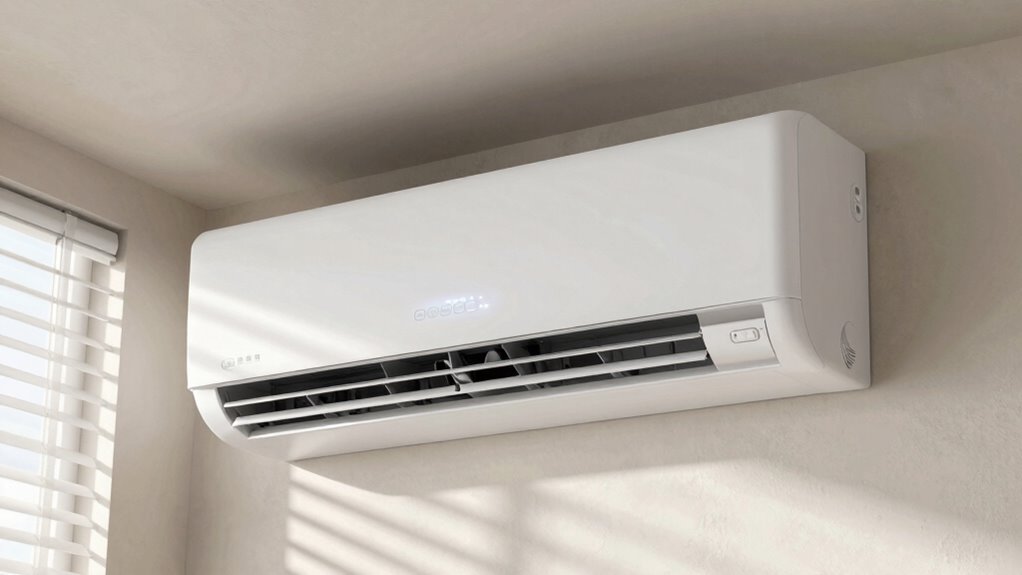

To choose the right BTU size for your window AC, start by measuring your room’s square footage and consider factors like insulation, sunlight, and electronic devices. Undersized units will struggle to cool effectively, while oversized ones cycle too quickly and waste energy. Proper sizing boosts efficiency, reduces noise, and keeps your space comfortable. Keep exploring, and you’ll discover how to accurately match your AC’s capacity for ideal performance.

Get your next haul delivered free with Prime
- Fast, free delivery on millions of items
- Prime Video, Amazon Music and more included
- Member-only deals all year
Key Takeaways
- Measure your room’s square footage accurately to determine the correct BTU size needed.
- Consider factors like insulation, sunlight exposure, and electronic heat sources for precise sizing.
- Use manufacturer BTU charts or online calculators to match your room specifics with recommended AC capacity.
- Avoid oversized units to prevent frequent cycling and noise, ensuring consistent comfort.
- Properly sized window AC units improve efficiency, extend lifespan, and reduce energy costs.
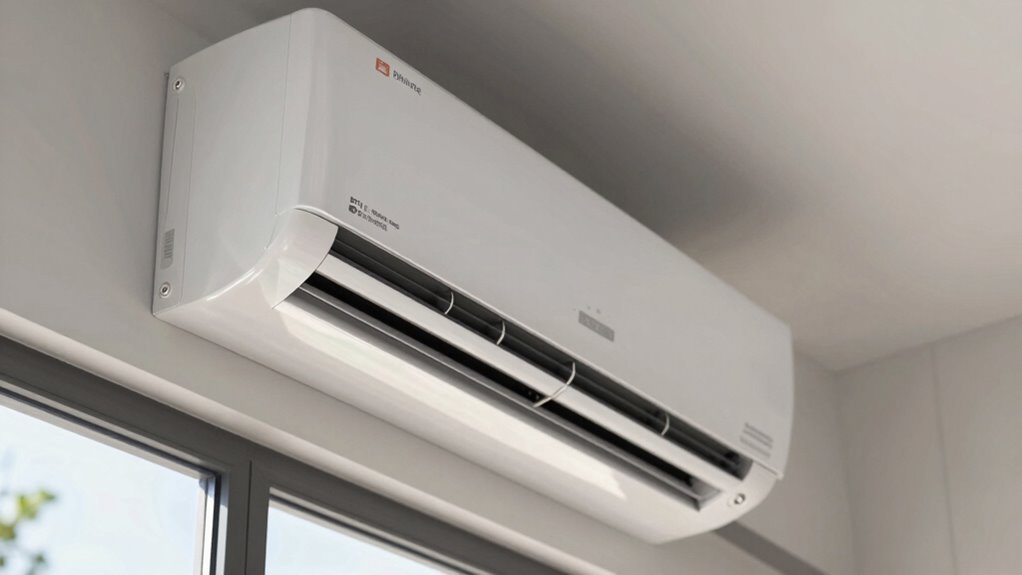
Choosing the right BTU size for your window air conditioner is essential to guarantee efficient cooling without wasting energy. When selecting a unit, you want to ascertain it matches the size of your space, so it cools effectively while keeping your energy bills in check. An undersized AC will struggle to cool the room, running constantly and consuming more electricity, while an oversized unit will cool too quickly, leading to frequent on-off cycles that waste energy and increase wear and tear. Proper sizing helps you optimize energy efficiency, reducing your electricity costs and environmental impact.
Choosing the right BTU size ensures efficient cooling and energy savings for your space.
Another important factor to consider is noise levels. A unit that’s too powerful for a small room can be louder because it cycles frequently, creating more disturbance. Conversely, an appropriately sized AC operates more quietly, providing a comfortable environment without constant buzzing or rattling. When you pick the right BTU, you not only improve energy efficiency but also enjoy a quieter, more peaceful space. Many modern units now incorporate noise-reduction features, but their effectiveness depends heavily on selecting the correct size for your room.
To determine the ideal BTU, you need to contemplate the room’s size, but also other factors like insulation, sunlight exposure, and the number of electronic devices inside. For example, a room with large windows or lots of sunlight may require a higher BTU to compensate for heat gain. Similarly, a room filled with electronics that generate heat will need a more powerful unit. If you choose a unit that’s too small, it will run constantly, increasing energy consumption and wearing out faster. If it’s too large, it will cycle on and off too frequently, wasting energy and causing temperature fluctuations.
Getting the right BTU size also impacts your comfort and the unit’s lifespan. When your AC is properly sized, it maintains a steady, comfortable temperature and reduces strain on the compressor. This not only saves energy but also extends the lifespan of your appliance. Additionally, understanding the cooling capacity of units can help you make more informed choices during selection. To simplify the process, many manufacturers offer sizing charts or calculators that take room dimensions and other factors into account. Using these tools, you can confidently select an air conditioner that balances energy efficiency, noise levels, and cooling performance.
window air conditioner BTU calculator
As an affiliate, we earn on qualifying purchases.
As an affiliate, we earn on qualifying purchases.
Frequently Asked Questions
How Does Insulation Quality Affect BTU Requirements?
Your insulation quality directly affects BTU requirements by influencing thermal resistance. Higher-quality insulation types, like foam or fiberglass, increase thermal resistance, helping keep the space cooler and reducing the BTUs needed. Conversely, poor insulation allows heat transfer, so you’ll need a more powerful AC. By improving insulation, you can lower your AC’s BTU needs, making cooling more efficient and saving energy and costs.
Can Multiple Small Units Outperform One Larger AC?
Multiple small units can outperform one larger AC by offering better energy efficiency and lower noise levels, especially in rooms with varying cooling needs. You can run only the units you need, reducing energy waste, and enjoy quieter operation since smaller units tend to be less noisy. This setup also provides flexibility for zoning different areas, ensuring each space gets the right cooling without overburdening a single, larger unit.
What’s the Impact of Ceiling Height on BTU Calculation?
Imagine your living room has a 10-foot ceiling instead of the standard 8 feet. Higher ceilings increase the volume of air needing cooling, so you’ll need more BTUs to maintain comfort. Elevated ceilings decrease airflow efficiency, making it harder for your AC to distribute cooled air evenly. To get the right size, account for ceiling height in your BTU calculation, ensuring your unit handles the larger space effectively.
Are There Eco-Friendly BTU Options for Window Units?
Yes, there are eco-friendly BTU options for window units. You can choose energy-efficient options that use eco-friendly refrigerants like R-32 or R-410A, which have lower global warming potential. These units help reduce your carbon footprint while still providing effective cooling. Look for models with high energy efficiency ratings to save energy and minimize environmental impact. By selecting eco-friendly refrigerants and efficient designs, you make a greener choice for your cooling needs.
How Often Should I Recalibrate BTU Sizing for My Home?
You should recalibrate your BTU sizing seasonally, especially before peak summer and winter months. This helps guarantee your window AC operates efficiently, saving energy and maintaining comfort. Regular adjustments can also extend your appliance’s longevity by preventing overworking or underperforming units. Keep an eye on changes in your home’s insulation, occupancy, or layout, and update your BTU needs accordingly for ideal cooling and heating performance year-round.
energy efficient window AC units
As an affiliate, we earn on qualifying purchases.
As an affiliate, we earn on qualifying purchases.
Conclusion
Don’t let guesswork be the thermostat of your comfort. Think of choosing the right BTU as planting a seed that blooms into perfect cooling, like a gentle breeze through an open window on a warm day. When you size your window AC correctly, you’re crafting a cozy oasis amid the heat, rather than battling a storm in a teacup. Get it right, and your cool sanctuary will stand tall, like a lighthouse guiding you safely through summer’s blaze.
quiet window air conditioners 5000 BTU
As an affiliate, we earn on qualifying purchases.
As an affiliate, we earn on qualifying purchases.
best size for small room air conditioner
As an affiliate, we earn on qualifying purchases.
As an affiliate, we earn on qualifying purchases.
Fall Picks
fall essentials
As an affiliate, we earn on qualifying purchases.