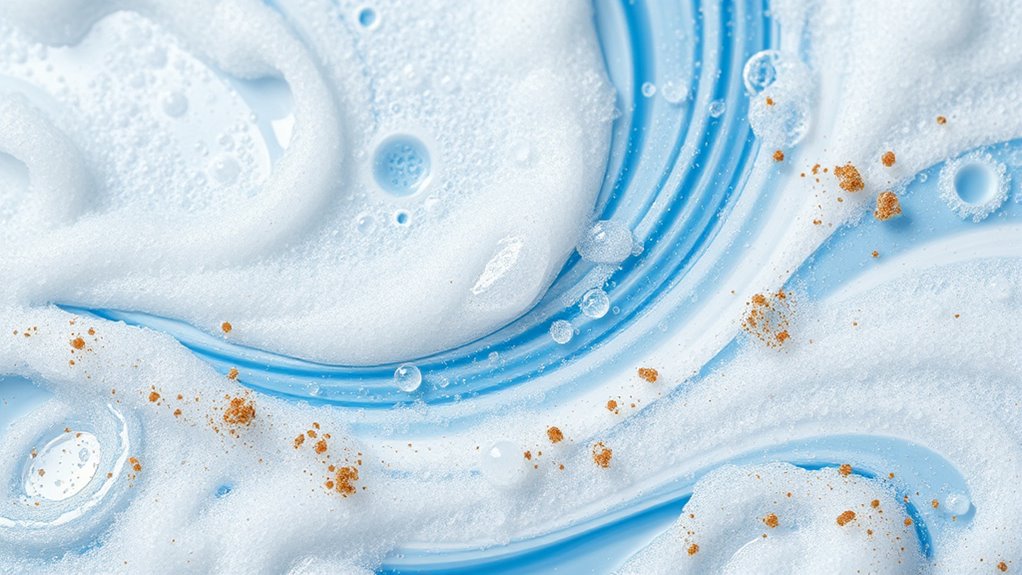
Surfactants in soaps and detergents work by lowering the surface tension between water and grease or dirt. They have a hydrophobic tail that binds to oils and a hydrophilic head that attracts water. This allows the dirt and grease to break away from surfaces and become suspended in water, making them easier to rinse away. To discover more about how these powerful molecules help keep things clean, keep exploring further.
Key Takeaways
- Surfactants have hydrophobic tails that attach to oils and dirt, lifting them from surfaces.
- The hydrophilic heads allow surfactants to interact with water, enabling dirt removal during rinsing.
- Surfactants form micelles around grease and grime, trapping them for easy rinsing away.
- The molecular structure reduces surface tension, enabling water to penetrate and loosen dirt particles.
- Different surfactant types (ionic, nonionic) optimize cleaning based on the nature of dirt and surface.
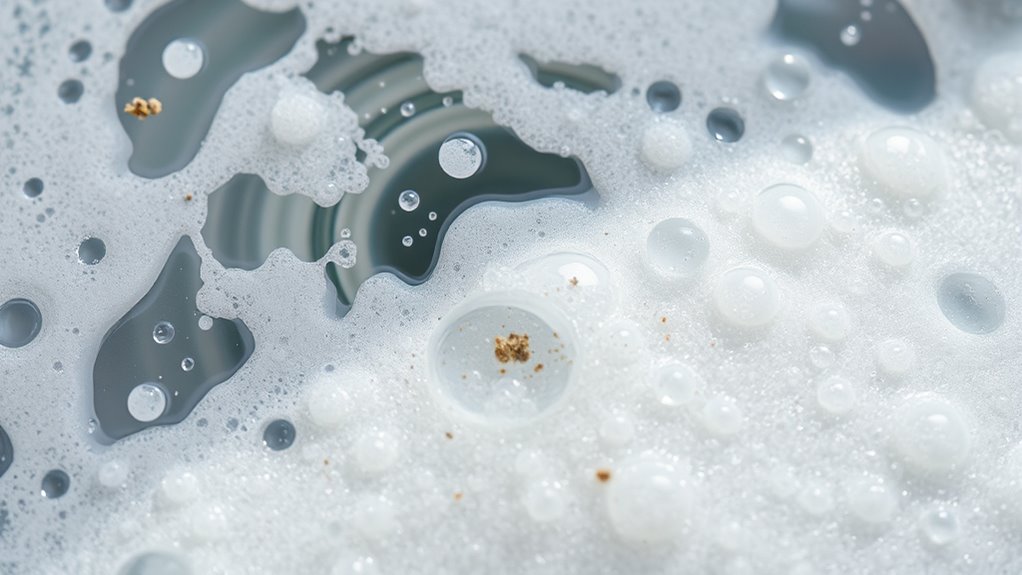
Surfactants are molecules that reduce the surface tension between liquids or between a liquid and a solid, making them essential in cleaning, emulsifying, and foaming processes. When you use soap or detergent, you’re relying on surfactants to lift dirt and grease away from surfaces. These molecules have a unique structure with a hydrophobic tail and a hydrophilic head, allowing them to interact with both water and oils. This dual affinity enables surfactants to surround and break down grime, making it easier for water to wash it away.
Surfactants lower surface tension, helping water lift dirt and grease efficiently.
There are several types of surfactants, each suited for different applications and possessing distinct properties. Anionic surfactants, for example, carry a negative charge and are highly effective at removing dirt and grease, which is why they’re common in laundry detergents and dish soaps. Cationic surfactants, bearing a positive charge, are often used in fabric softeners and disinfectants because they have antimicrobial properties. Nonionic surfactants, which lack a charge, tend to be milder and are frequently found in personal care products like shampoos and body washes. Amphoteric surfactants can act as either anionic or cationic depending on the pH, making them versatile for various cleaning tasks. Understanding these types helps you choose the right product for your specific needs, whether it’s cleaning dishes, washing clothes, or personal hygiene.
However, the widespread use of surfactants raises concerns about their environmental impact. Many surfactants, especially synthetic ones, do not readily degrade in nature. When they enter water bodies through washing or runoff, they can persist and accumulate, harming aquatic life. These chemicals can disrupt ecosystems by affecting the reproduction and growth of fish and invertebrates. Additionally, some surfactants can cause foam buildup in rivers and lakes, which can deplete oxygen levels and threaten aquatic organisms. This environmental footprint has prompted researchers and manufacturers to develop biodegradable surfactants derived from natural sources, aiming to minimize long-term ecological damage.
As a consumer, it’s important to be aware of the types of surfactants in the products you use and their potential environmental effects. Opting for eco-friendly or biodegradable options can markedly reduce your ecological footprint. Manufacturers are increasingly providing information about the environmental impact of their formulations, so reading labels helps you make more sustainable choices. While surfactants are incredible cleaning agents, understanding their variety and environmental implications allows you to balance effective cleaning with responsible consumption.
Frequently Asked Questions
Are All Surfactants Environmentally Friendly?
Not all surfactants are environmentally friendly. Some contain non-biodegradable formulas that can harm ecosystems. However, eco-friendly surfactants are designed to be biodegradable, breaking down more quickly and reducing pollution. When choosing cleaning products, look for those with eco-friendly surfactants or biodegradable formulas to minimize environmental impact. By making conscious choices, you help protect the environment while still keeping your home clean.
How Do Surfactants Differ From Emulsifiers?
Surfactants differ from emulsifiers mainly in their molecular structures and functions. Surfactants have a hydrophilic head and hydrophobic tail, allowing them to reduce water’s surface tension and lift dirt. Emulsifiers, a type of surfactant, stabilize mixtures of oil and water by forming micelles. Their classifications depend on the head groups, like anionic, cationic, or nonionic, which influence how they interact with oils, water, and dirt.
Can Surfactants Cause Skin Irritation?
Yes, surfactants can cause skin irritation, especially if you have skin allergies or are prone to contact dermatitis. Think of your skin as a delicate barrier that surfactants might weaken, leading to redness, itching, or rashes. If you notice irritation after using certain soaps or detergents, it’s wise to switch to milder, hypoallergenic options. Always rinse thoroughly to minimize potential reactions and protect your skin’s health.
What Are Biodegradable Surfactants?
Biodegradable surfactants are eco-friendly cleaning agents that break down naturally in the environment. You’ll find plant-based surfactants, which are natural and derived from renewable resources, making them biodegradable. Unlike synthetic surfactants, which may persist longer, natural surfactants decompose faster, reducing pollution. Choosing biodegradable surfactants helps protect ecosystems, supports sustainability, and offers gentle cleaning without harmful residues, making them a smart option for environmentally conscious cleaning.
How Do Surfactants Work in Hard Water?
In hard water, surfactants work by reducing water’s surface tension, helping them bind to dirt and oils despite mineral buildup caused by water hardness. They form micelles that encapsulate dirt particles, making it easier to wash away. This process prevents mineral deposits from interfering with cleaning, ensuring your soap or detergent works effectively even when minerals like calcium and magnesium are present in the water.
Conclusion
Now that you know how surfactants work, you can appreciate their power in cleaning. Imagine billions of tiny molecules, each one chasing away dirt and grease from your clothes and dishes. In fact, a single drop of detergent can contain millions of these molecules, working tirelessly to lift grime. Next time you wash up, remember you’re harnessing the strength of these microscopic heroes—making even the dirtiest messes vanish with ease.