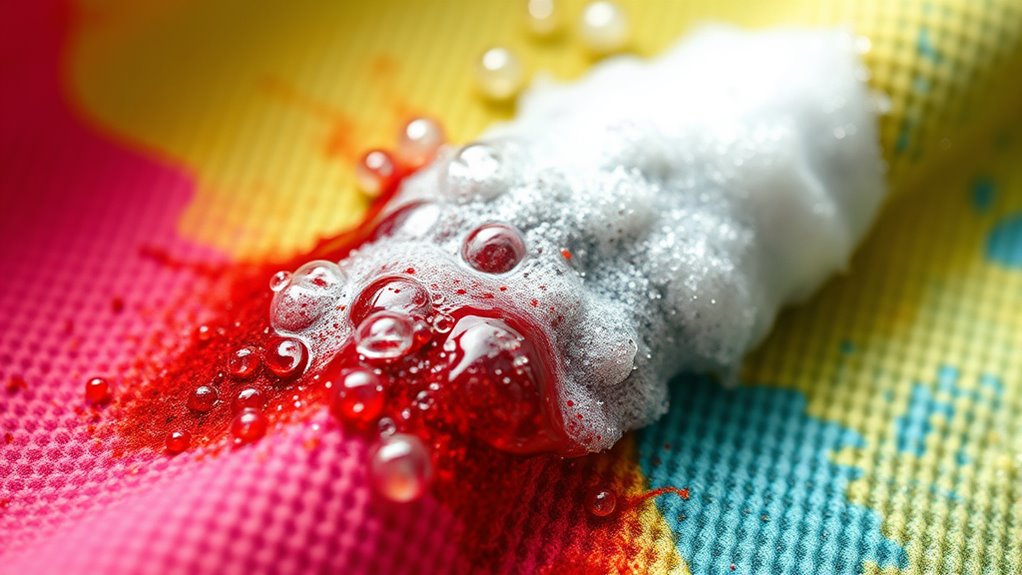
Enzyme cleaners work by using natural biological catalysts called enzymes to break down organic stains and odors. When you apply the cleaner, the enzymes latch onto molecules like proteins, fats, or starches embedded in the stain. They then catalyze chemical reactions that break these molecules into smaller, easier-to-remove pieces. This efficient process not only tackles visible stains but also eliminates lingering smells. To discover more about how enzymes make cleaning more effective, keep exploring further.
Key Takeaways
- Enzymes in cleaners latch onto organic molecules in stains, breaking them into smaller, easier-to-remove compounds.
- They target specific materials like proteins, fats, or starches, effectively dissolving organic messes.
- Enzymes catalyze chemical reactions that decompose stains into water, carbon dioxide, or other harmless substances.
- The breakdown process allows stains to be rinsed away or absorbed more easily by cleaning tools.
- This biological action also helps eliminate odors caused by organic residues, leaving surfaces fresh.
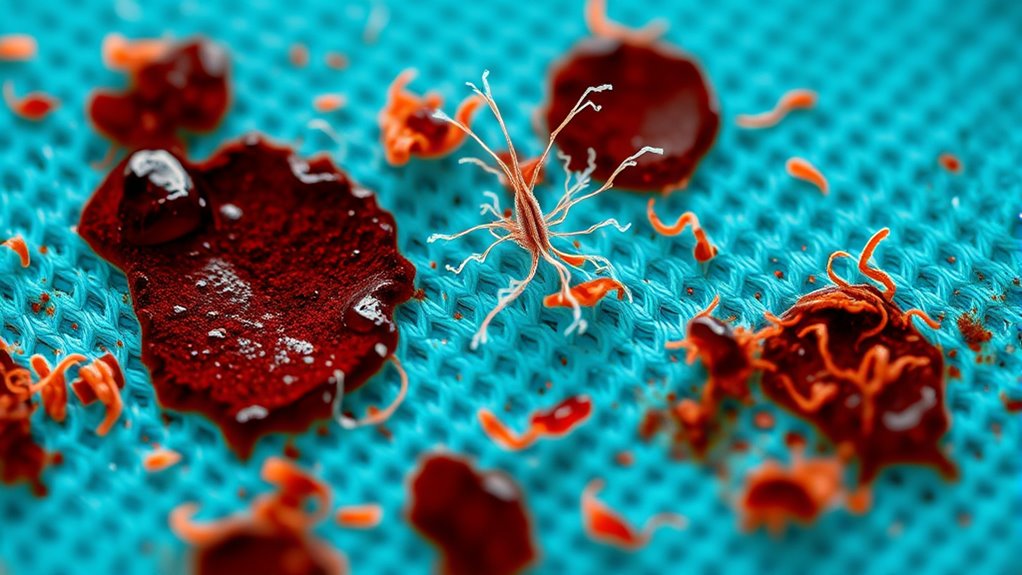
Enzyme cleaners are powerful solutions that break down organic stains and odors naturally, making them an eco-friendly choice for your cleaning needs. They use biodegradable ingredients that are gentle on the environment while effectively tackling tough messes. When you choose enzyme cleaners, you’re opting for stain removal techniques that harness natural biological processes to eliminate stains at their source, rather than just masking odors or surface-level cleaning. These cleaners contain enzymes—proteins that catalyze chemical reactions—designed to target specific organic materials like proteins, starches, and fats. As a result, they can dissolve messes caused by food, pet accidents, grass, and other organic substances more thoroughly than conventional cleaning products.
To get the best results, understanding how these stain removal techniques work is essential. When you apply an enzyme cleaner, the enzymes latch onto organic molecules embedded in the stain. They then break these molecules down into smaller, more manageable compounds, which can be easily rinsed away or absorbed by cleaning cloths. This process not only removes the visible stain but also eradicates lingering odors, leaving your space fresher and cleaner. Unlike harsh chemical cleaners, enzyme solutions are biodegradable, meaning they break down naturally over time without polluting waterways or harming wildlife. This makes them a sustainable option, especially if you’re concerned about the environmental impact of your cleaning routine.
In practice, effective stain removal with enzyme cleaners involves a few straightforward techniques. First, you should blot or scrape excess stain material if possible, to prevent spreading. Then, apply the enzyme solution directly onto the affected area, ensuring it penetrates deeply into the fibers or surface. For stubborn stains, letting the cleaner sit for 15 to 30 minutes allows the enzymes ample time to work. In some cases, a gentle scrubbing or agitation helps the enzymes reach every part of the stain. After the treatment, rinse or wipe away the residue with water or a clean cloth, revealing a cleaner, fresher surface. Regular use of enzyme cleaners can also help improve air quality in your home by reducing odors caused by organic matter, especially in enclosed spaces.

Biokleen Bac Out Enzyme Cleaner, Stain & Pet Odor Eliminator, Lime Scent
- Effective Stain and Odor Removal: Removes pet stains, wine, and more
- Trusted by Professionals: Preferred by commercial carpet cleaners
- Bio-Active Enzyme Formula: Breaks down organic stains naturally
As an affiliate, we earn on qualifying purchases.
As an affiliate, we earn on qualifying purchases.
Frequently Asked Questions
Are Enzyme Cleaners Safe for All Types of Fabrics?
Enzyme cleaners are generally safe for most fabrics, but you should always check fabric compatibility first. Some delicate or synthetic materials might not tolerate enzyme safety, so test a small hidden area before full application. While enzymes work well on organic stains, they can sometimes cause discoloration or damage to sensitive fabrics. Always follow the manufacturer’s instructions for the best results and to keep your fabrics safe.
How Long Do Enzyme Cleaners Take to Work?
Enzyme cleaners typically take about 30 minutes to a few hours to work, depending on the stain and fabric. You’ll notice stain removal happening as enzyme activity breaks down organic matter. For best results, follow the product instructions and let the cleaner sit long enough for enzymes to fully activate. Patience is key—allowing enough time guarantees maximum enzyme activity and effective stain removal.
Can Enzyme Cleaners Remove Old, Set-In Stains?
You might be surprised, but enzyme cleaners can often tackle old, set-in stains if you give them enough time. Their enzyme effectiveness allows them to break down stubborn proteins within the stain, gradually lifting even the most stubborn marks. Patience is key—apply the enzyme stain remover, let it sit, and repeat if necessary. With persistence, you’ll notice those long-standing stains fading away, revealing a cleaner, fresher surface.
Are Enzyme Cleaners Effective Against Pet Odors?
Yes, enzyme cleaners are effective against pet odors because they target and break down the organic compounds causing the smell. You’ll notice improved pet odor elimination with regular use. The enzyme cleaning benefits include naturally neutralizing odors without harsh chemicals, making your home fresher and safer. For best results, apply enzyme cleaners directly to affected areas and let them sit, allowing the enzymes to fully work on odor-causing molecules.
How Should Enzyme Cleaners Be Stored for Maximum Effectiveness?
To keep enzyme cleaners effective, store them in a cool, dry place away from direct sunlight. Follow the storage tips on the label, and verify the container is tightly sealed to prevent contamination and evaporation. Proper storage helps extend the shelf life, so your enzyme cleaner remains potent when needed. Avoid freezing or overheating, as extreme temperatures can break down the enzymes and reduce their stain-fighting ability.
Biokleen Bac-Out Enzyme Cleaner and Stain & Odor Remover for Pet Stains, Laundry, Diapers, Wine, Carpets, & More, Eco-Friendly, Non-Toxic, Lime Scent, 128 Ounces
- Effective Stain and Odor Removal: Removes pet stains, wine, and more
- Trusted by Professionals: Preferred by commercial carpet cleaners
- Bio-Active Enzyme Formula: Breaks down organic stains naturally
As an affiliate, we earn on qualifying purchases.
As an affiliate, we earn on qualifying purchases.
Conclusion
Now that you know how enzyme cleaners work, you’re armed with a secret weapon against stains. With their powerful enzymes, they break down messes faster than a superhero saving the day. Say goodbye to stubborn spots and hello to a cleaner, fresher home. Trust me, once you see these cleaners in action, you’ll wonder how you ever managed without this stain-fighting magic. Get ready to conquer stains like never before!

Rocco & Roxie Supply Co. Stain & Strong Odor Eliminator, Enzyme Cleaner, Pet Odor Eliminator for Home – Carpet Stain Remover for Cats & Dog Pee – Urine Destroyer – Carpet Cleaner Spray Clear, 32 Fl Oz
- Safe for Pets and Children: Chlorine free, residue-free, CRI certified
- Effective Stain and Odor Removal: Eliminates pet urine, feces, vomit, organic spills
- Versatile Surface Use: Suitable for carpets, floors, furniture, clothing, kennels
As an affiliate, we earn on qualifying purchases.
As an affiliate, we earn on qualifying purchases.

Shout Active Enzyme Laundry Stain Remover Spray, Triple-Acting Formula Clings, Penetrates, and Lifts 100+ Types of Everyday Stains – Prewash Spray 22oz
- Product Quantity: 22oz spray bottle
- Eco-Friendly Material: Made with 25% recycled plastic
- Versatile Stain Removal: Works on food, drinks, makeup, and more
As an affiliate, we earn on qualifying purchases.
As an affiliate, we earn on qualifying purchases.