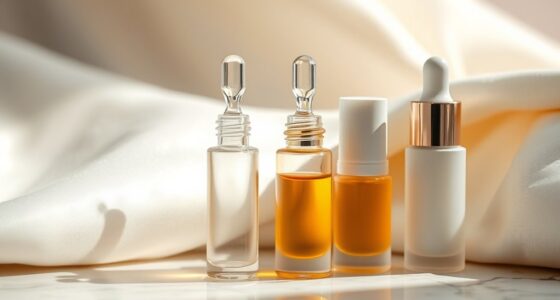
To layer luxury actives without irritation, apply lightweight formulas first, like antioxidants or water-soluble products, on damp skin for better absorption. Follow with thicker or occlusive products to seal everything in. Avoid combining potent ingredients like vitamin C and niacinamide at the same time, and alternate acids with retinoids to prevent over-exfoliation. Introduce new products gradually with patch tests. If you keep these tips in mind, you’ll access a harmonious, effective routine—more insights await if you continue.
Key Takeaways
- Apply lightweight actives first, followed by thicker, occlusive products to enhance absorption and reduce irritation.
- Introduce new luxury actives gradually and perform patch tests to monitor skin response.
- Space out potent ingredients like vitamin C and niacinamide or acids and retinoids to prevent adverse reactions.
- Use water-based actives on damp skin and seal with occlusives to maximize benefits and minimize irritation.
- Adjust routine based on skin’s reaction, prioritizing gentle formulations and proper layering techniques for sensitive skin.

Layering luxury actives can maximize your skincare routine’s effectiveness, but it’s essential to understand how to combine them properly. When you’re dealing with potent ingredients, concentration techniques become vital to ensure you get the benefits without risking irritation. Start by applying products with the thinnest, most lightweight textures first, then follow with thicker, more occlusive formulas. This approach helps your skin absorb actives more efficiently and reduces the chance of unnecessary irritation caused by overlapping too many potent ingredients at once.
Apply lightweight actives first, then follow with thicker formulas to maximize absorption and minimize irritation.
Ingredient compatibility is another key factor. Not all actives play nicely together, so knowing which ingredients can be combined safely is crucial. For example, pairing vitamin C with niacinamide can sometimes cause flushing or redness, especially if your skin is sensitive. To avoid this, you might apply vitamin C in the morning and reserve niacinamide for your evening routine. Similarly, layering acids like AHAs or BHAs with retinoids can lead to over-exfoliation, so it’s best to alternate their use or introduce them gradually.
When you’re layering luxury actives, always pay attention to the concentration levels. Higher concentrations aren’t necessarily better; they can increase the likelihood of irritation, especially for sensitive skin. Instead, focus on products with well-balanced formulations designed for daily use. Use a patch test when trying new combinations to gauge how your skin reacts before applying them to your entire face. If a product contains multiple active ingredients, read the label carefully to understand its concentration and how it fits into your routine.
Timing matters, too. Incorporate actives in a way that minimizes their interaction. For example, water-soluble ingredients like vitamin C are best applied to clean, damp skin to enhance absorption, while occlusive or emollient products help seal in actives and lock in hydration. Don’t forget to introduce new actives gradually—this gives your skin time to adjust and helps you spot potential irritation early.
Additionally, understanding product layering techniques can help you optimize your routine and prevent ingredient conflicts. Finally, listen to your skin. If you notice redness, burning, or peeling, scale back on the concentration or frequency of certain actives. Layering luxury actives is about creating a tailored routine that maximizes benefits without overwhelming your skin. By understanding concentration techniques and ingredient compatibility, you can confidently build a regimen that’s effective, safe, and gentle, ensuring your skin reaps the rewards of your luxurious product lineup.

Good Molecules Hyaluronic Acid Serum – 1% Hyaluronic Acid Non-greasy Ultra Hydrating Serum, Facial Moisturizer for Plumper Skin, Skin Care for Face
DEEP, LONG LASTING HYDRATION: Experience the moisturizing power of Hyaluronic Acid! Embrace newfound confidence with the Good Molecules…
As an affiliate, we earn on qualifying purchases.
As an affiliate, we earn on qualifying purchases.
Frequently Asked Questions
Can Layering Luxury Actives Cause Long-Term Skin Damage?
Layering luxury actives won’t cause long-term skin damage if you pay attention to product compatibility and ingredient sensitivity. You should introduce new products gradually and patch-test first to avoid reactions. Overusing potent actives can lead to irritation, but proper layering and understanding your skin’s needs help prevent long-term harm. Listen to your skin, adjust your routine accordingly, and always consult a dermatologist if you’re unsure about combining specific actives.
How Do I Identify if My Skin Reacts Negatively?
You can tell if your skin reacts negatively by paying attention to sensory sensitivity or allergic reactions. If you notice redness, itching, burning, or swelling after applying certain products, your skin might be sensitive or allergic. Keep track of these responses and patch test new actives before full application. If irritation persists, consider consulting a dermatologist to identify specific triggers and prevent further reactions.
Are There Specific Actives That Should Be Avoided Together?
Yes, some actives should be avoided together due to ingredient interactions and pH balance considerations. For example, avoid combining retinol with vitamin C, as they can destabilize each other, reducing effectiveness. Also, steer clear of acids like AHAs or BHAs with retinoids, as they can irritate your skin. Always check product pH levels and wait a few minutes between applying different actives to minimize irritation and maximize benefits.
How Often Should I Adjust My Layering Routine?
You should adjust your layering routine based on your skin sensitivity and how it reacts to products. Start by using active products 2-3 times a week, then gradually increase frequency if your skin tolerates it well. Pay attention to any irritation or redness, and don’t hesitate to reduce product frequency if your skin shows signs of sensitivity. Regularly reassess your skin’s response to maintain a gentle, effective routine.
What Are the Signs of Over-Exfoliation From Layering Products?
If you notice peeling or redness, it’s a sign of over-exfoliation, especially from layering products too frequently. Sensitivity flare-ups, tingling, or burning sensations also indicate your skin is overwhelmed. You might see increased irritation or dry patches. To prevent this, reduce the frequency of active layers, give your skin time to recover, and always listen to its signals. Properly balancing your routine helps maintain healthy, radiant skin without irritation.

Premium 20% Vitamin C Serum For Face with Hyaluronic Acid, Retinol & Amino Acids – Boost Skin Collagen,Hydrate & Plump Skin, Anti Aging & Wrinkle Facial Serum 60ml
Plant Based Formulation – Free of synthetic color additives, fragrance, and stabilizers, dynamic active botanicals like Aloe Vera,…
As an affiliate, we earn on qualifying purchases.
As an affiliate, we earn on qualifying purchases.
Conclusion
Think of your skincare routine as a symphony, where each active plays its part without clashing. By layering luxury actives thoughtfully, you’re channeling the finesse of a master composer—creating harmony without the irritation. Remember, even the most precious pearls need gentle handling to shine. So, be patient, listen to your skin’s cues, and let your routine evolve gracefully. After all, radiant skin is your masterpiece—worthy of a delicate touch.

Eva Naturals Retinol + Squalane Serum – Anti Aging Face Serum for Wrinkles, Collagen Boost, Eye & Night Use – Retinoid Skin Care for Acne, Pores, Dark Spots & Sensitive Skin
POTENT YET GENTLE RETINOL FOR ALL SKIN TYPES: Packed with a powerful blend of retinol and retinyl palmitate,…
As an affiliate, we earn on qualifying purchases.
As an affiliate, we earn on qualifying purchases.

belif Moisturizing Bomb – Daily Ceramide Moisturizer with Peptide & Squalane, 48hr Hydration & Anti-Aging Cream, Milky & Lightweight, Restores Skin Barrier, Korean Skincare, 0.84 fl oz (25ml)
48-Hour Intense Hydration with a Soft, Creamy Texture – Clinically tested to provide up to 48 hours of…
As an affiliate, we earn on qualifying purchases.
As an affiliate, we earn on qualifying purchases.