Centrifugal juicers use fast-spinning blades to quickly extract juice, making them ideal if you want quick results and a lower upfront cost. Masticating juicers operate at slower speeds, crushing produce gently to maximize juice yield and nutrients, especially from leafy greens. They tend to be quieter and more efficient but take longer to juice. To discover which type suits your lifestyle and needs best, explore the differences further below.
Key Takeaways
- Centrifugal juicers operate quickly with high-speed spinning, while masticating juicers crush produce slowly for better juice extraction.
- Masticating juicers generally produce higher juice yield and better nutrient preservation compared to centrifugal models.
- Centrifugal juicers are louder and faster, ideal for quick daily use; masticating juicers are quieter but slower.
- Masticating juicers tend to be more expensive upfront but offer superior juice quality and efficiency.
- Choose based on your priority: speed and convenience or juice quality and nutrient retention.
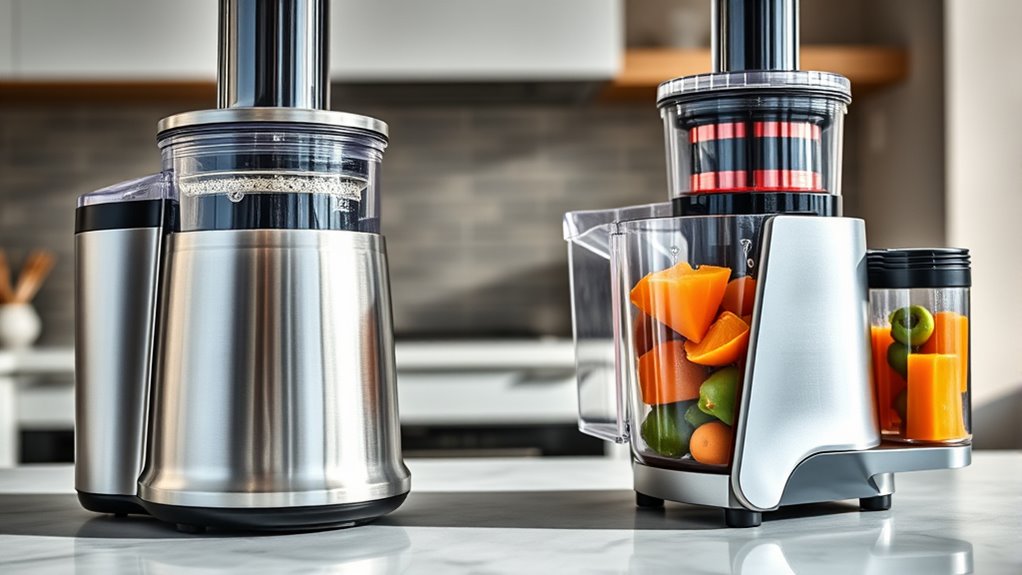
Are you overwhelmed by the variety of juicers available and unsure which one suits your needs best? With so many options on the market, choosing between centrifugal and masticating juicers can feel intimidating. To make an informed decision, it’s essential to understand how each type performs in terms of juicer efficiency and noise levels.
Centrifugal juicers are popular for their speed and convenience. They operate by spinning juice from fruits and vegetables at high speeds, using a sharp blade to cut the produce and a rapidly spinning basket to separate the juice from pulp. This process makes them incredibly fast, allowing you to get your juice in a matter of seconds. When considering juicer efficiency, centrifugal models excel at extracting juice quickly, but they sometimes produce slightly less juice compared to masticating types, especially from leafy greens and wheatgrass. Their high-speed operation can generate more heat, which might lead to some nutrient degradation over time. Noise levels are another factor to keep in mind; centrifugal juicers tend to be louder due to their high-speed spinning. If you prefer a quieter kitchen or plan to juice early in the morning, this could be a disadvantage.
On the other hand, masticating juicers, also known as slow or cold-press juicers, work differently. They crush and press produce slowly, extracting juice through a gentle squeezing process. This method maximizes juicer efficiency, yielding more juice from the same amount of produce, especially leafy greens and herbs. Because they operate at lower speeds, they generate less heat, preserving more nutrients and enzymes in your juice. The downside is that masticating juicers are generally slower, taking more time to produce your drink. They are also usually more expensive upfront. Noise levels are considerably lower with masticating models, making them a quieter option for those who value a peaceful kitchen environment or want to juice early mornings without disturbing others.
Ultimately, your choice depends on what matters most to you. If you prioritize speed and convenience, a centrifugal juicer might be your best bet, even if it’s noisier and slightly less efficient for certain produce. Conversely, if you want maximum juice yield, nutrient retention, and a quieter operation, a masticating juicer could be the better choice, despite the longer prep time. Consider your typical juicing habits and preferences, and weigh these factors carefully to select the right juicer that fits your lifestyle.
Top picks for "juicer centrifugal masticat"
As an affiliate, we earn on qualifying purchases.
Frequently Asked Questions
Which Juicer Retains More Nutrients in the Juice?
You’ll find that masticating juicers generally retain more nutrients in the juice, thanks to their slower, cold-press process. This method minimizes heat and oxidation, which helps preserve nutrients and results in higher-quality juice. If nutrient preservation and juice quality are your priorities, a masticating juicer is the better choice. It extracts more vitamins, enzymes, and minerals, giving you a healthier, more nutrient-rich juice every time.
How Noisy Are Centrifugal and Masticating Juicers During Operation?
Like a thunderstorm in your kitchen, centrifugal juicers are noisy during operation, producing high noise levels that can be disruptive. Masticating juicers run more quietly, similar to a gentle breeze, with lower operation sounds. If you prefer a quieter experience, a masticating juicer is your best bet. Centrifugal models are louder, making them less ideal for early mornings or shared spaces where noise matters.
What Is the Typical Lifespan of Each Juicer Type?
You can expect centrifugal juicers to last around 5 to 10 years, while masticating juicers often endure 10 to 15 years with proper care. Durability comparisons show masticating models typically have sturdier components, and they often come with longer warranty coverage. To maximize lifespan, follow manufacturer instructions for cleaning and maintenance, regardless of the type you choose.
Are There Specific Fruits or Vegetables Better Suited for One Type?
Think of your juicer as a musical instrument tuning for different flavors. Centrifugal juicers excel with juicy, high-water-content fruits like oranges and apples, giving you quick, vibrant extracts. Masticating models handle leafy greens and denser vegetables like kale or carrots with grace, extracting more nutrients. So, your fruit compatibility and vegetable preferences guide your choice—letting each juicer sing its best tune with the produce that suits it best.
How Much Maintenance and Cleaning Do Each Juicer Require?
You’ll find that centrifugal juicers require more frequent cleaning, usually after each use, to prevent pulp buildup and guarantee ideal performance. Masticating juicers are easier to clean and need less maintenance, often only requiring cleaning every few uses. Regarding maintenance costs, centrifugal models tend to have more wear-and-tear parts, leading to higher expenses over time. Regular cleaning and proper care help extend your juicer’s lifespan, especially for centrifugal types.
Conclusion
Choosing between a centrifugal and masticating juicer depends on your needs. For instance, if you want quick juice for busy mornings, a centrifugal juicer works well. But if you’re after higher nutrient quality and less oxidation, a masticating juicer is better. Imagine Sarah, who switched to a masticating juicer and noticed her greens stayed fresher longer and tasted richer. Ultimately, pick what fits your lifestyle, and enjoy fresh, healthy juice every day!