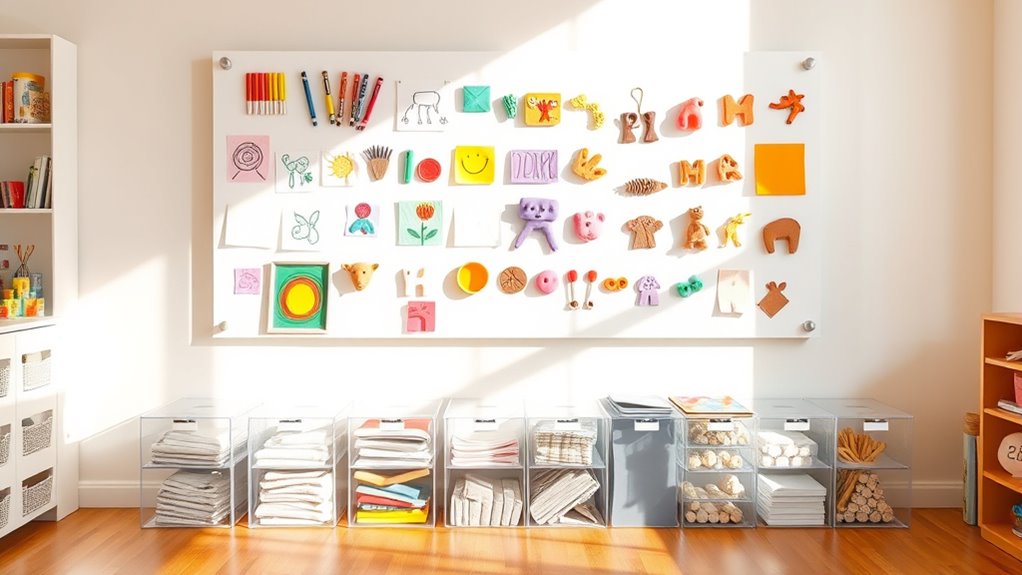

To effectively manage your child’s artwork, combine thoughtful storage with creative display options. Use digital archiving to preserve pieces forever and clear bins or albums for cherished physical items. Enhance visual appeal by framing special artwork or creating gallery walls that showcase their talents. Balancing digital and physical methods helps reduce clutter while highlighting their creativity. Keep exploring for practical tips to celebrate and maintain your child’s artistic journey in your home.
Key Takeaways
- Use digital archiving to preserve artwork digitally, reducing physical clutter while keeping all creations accessible.
- Create a dedicated display area with creative framing and gallery arrangements to showcase favorite pieces.
- Rotate displayed artwork regularly to keep displays fresh and encourage children’s pride in their work.
- Store particularly meaningful physical pieces, like first drawings or milestones, in a safe, organized manner.
- Combine digital archives with selective physical storage to balance preservation, display, and space management.

Kids’ artwork is more than just colorful scribbles and stick figures; it’s a window into their imagination and emotional growth. As a parent or caregiver, you likely want to honor their creativity while keeping your space organized. One effective way to do this is through digital archiving. By taking high-quality photos or scans of their masterpieces, you can preserve these precious creations forever without cluttering your home. Digital archiving allows you to create a virtual gallery that’s easy to access and share with family and friends. It also makes it simple to revisit your child’s artistic journey over the years, watching their skills and interests evolve. Plus, it’s a practical solution for reducing physical storage needs while still holding onto every piece that matters. Proper sizing and load‑planning helps ensure that your storage solutions fit your space and keep your collection manageable.
Once you’ve digitized your child’s artwork, you can move beyond simple storage and get creative with how you display their work. Creative framing is an excellent strategy to showcase special pieces in a way that elevates their significance. Instead of just taping a drawing to the fridge or pinning it on the wall, consider using colorful mats, unique frames, or even repurposing vintage frames to add character. You might also opt for gallery-style arrangements in a dedicated space, rotating artwork regularly to keep the display fresh and exciting. Framing their artwork thoughtfully not only highlights their effort but also boosts their confidence, making them feel proud of their creations. It transforms their art into meaningful decor, turning a simple drawing into a cherished keepsake.
Combining digital archiving with creative framing offers a balanced approach to managing your child’s artistic output. You can keep the physical pieces that hold the most sentimental value, like a first drawing or a piece that marked a milestone, while digitally storing the rest. This approach helps you avoid overwhelming storage spaces while still honoring every stage of your child’s artistic development. When you want to celebrate a particular piece, framing it creatively makes it a focal point in your home, encouraging your child to continue exploring their creativity. It’s a way to turn their artwork into lasting memories, admired not just by you but also by visitors who appreciate the effort and imagination behind each piece.
In the end, thoughtful storage and display strategies show your child that their art is valued. Digital archiving ensures that nothing is lost, while creative framing allows you to showcase their best work in ways that brighten your home and inspire confidence. Together, these methods help you preserve the magic of childhood creativity, making every scribble and masterpiece meaningful and accessible for years to come.
As an affiliate, we earn on qualifying purchases.
Frequently Asked Questions
How Can I Encourage My Child’s Artistic Development at Home?
You can encourage your child’s artistic development at home by creating a supportive environment that boosts their artistic confidence. Establish regular creative routines, like daily drawing or craft time, to foster consistency and enthusiasm. Offer positive feedback and display their artwork proudly, which motivates them to explore new ideas. Providing a variety of materials and space for experimentation helps cultivate their creativity and nurtures a lifelong love for art.
What Are Eco-Friendly Options for Storing Kids’ Artwork?
Imagine your child’s art bursting with color like a garden in full bloom. To keep it eco-friendly, you can use recycled materials for storage, turning old boxes into treasure chests. Biodegradable storage options, like paper folders or plant-based plastics, break down gently in the earth’s embrace. These choices protect your child’s creativity while nurturing the planet, making every masterpiece a celebration of sustainability.
How Can I Involve My Child in Choosing Displays?
You can involve your child in choosing displays by asking for their input on which artwork to showcase. Take them to select pieces for custom framing or create themed displays together, like a seasonal or color-based theme. Encourage their ideas and let them help arrange the artwork on walls or shelves. This makes the process fun and meaningful, fostering pride and ownership in their creative achievements.
What Are Creative Ways to Repurpose Old Artwork?
Did you know that nearly 30% of household waste comes from paper? You can turn old artwork into creative recycling projects by making DIY frames or collages. This not only declutters but also celebrates your child’s creativity. Repurposing their art keeps memories alive, while giving new life to what might otherwise be discarded. So, gather those masterpieces and start transforming them into unique, meaningful displays around your home!
How Do I Handle the Emotional Attachment to Artwork?
To handle the emotional attachment to artwork, set clear emotional boundaries, recognizing its sentimental value without letting it overwhelm you. You might keep a few special pieces and gently let go of others, understanding that the memories matter more than the objects. Celebrate your child’s creativity, but don’t feel pressured to hold onto everything. This balanced approach helps you preserve meaningful memories while maintaining a clutter-free space.
kids' artwork frames and gallery wall kits
As an affiliate, we earn on qualifying purchases.
As an affiliate, we earn on qualifying purchases.
Conclusion
Just like Van Gogh’s masterpieces, your child’s artwork is a reflection of their unique creativity. By thoughtfully storing and displaying these pieces, you honor their imagination and encourage their growth. Remember, every scribble and splash of color tells a story—so cherish these moments as you would a priceless gallery. With a little effort, you turn clutter into a curated collection, turning your home into a personal museum of their evolving talents.
As an affiliate, we earn on qualifying purchases.
As an affiliate, we earn on qualifying purchases.