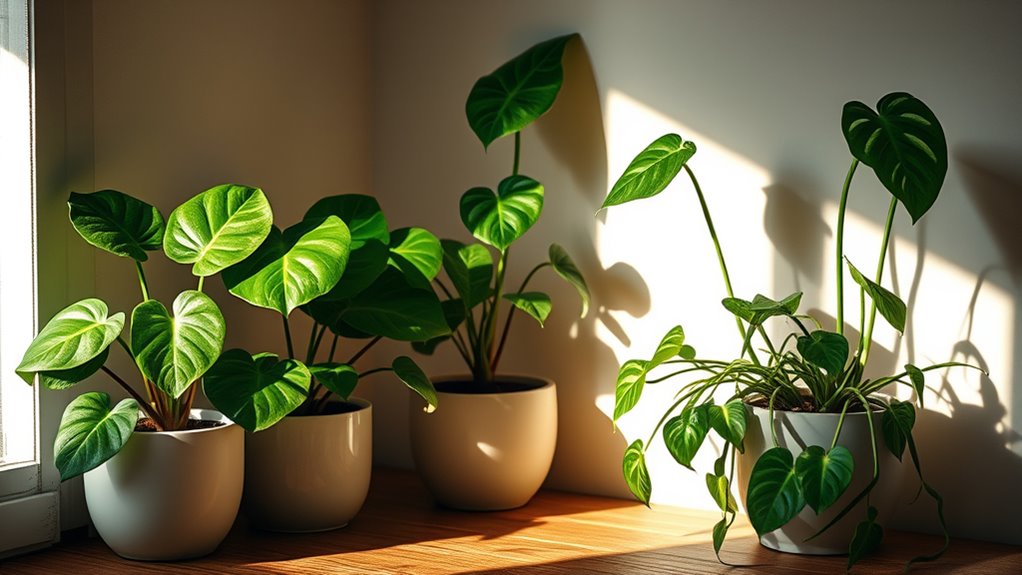

To care for low-light indoor plants, water them only when the soil feels dry—avoid overwatering to prevent root rot. Use well-draining soil and containers with proper drainage to keep roots healthy. Place your plants in shaded or filtered light, like near north-facing windows, and regularly check for pests such as spider mites or mealybugs. Maintaining these basics helps your plants thrive; discover more tips to keep them fuss-free and growing strong.
Key Takeaways
- Water low-light indoor plants only when the soil feels dry, avoiding overwatering to prevent root rot.
- Use well-draining soil and containers with proper drainage to promote healthy growth.
- Place plants in indirect or filtered light, such as near north-facing windows or shaded corners.
- Regularly inspect for pests like spider mites or mealybugs, and treat infestations early.
- Maintain good airflow and avoid overwatering to reduce pest and disease risks.
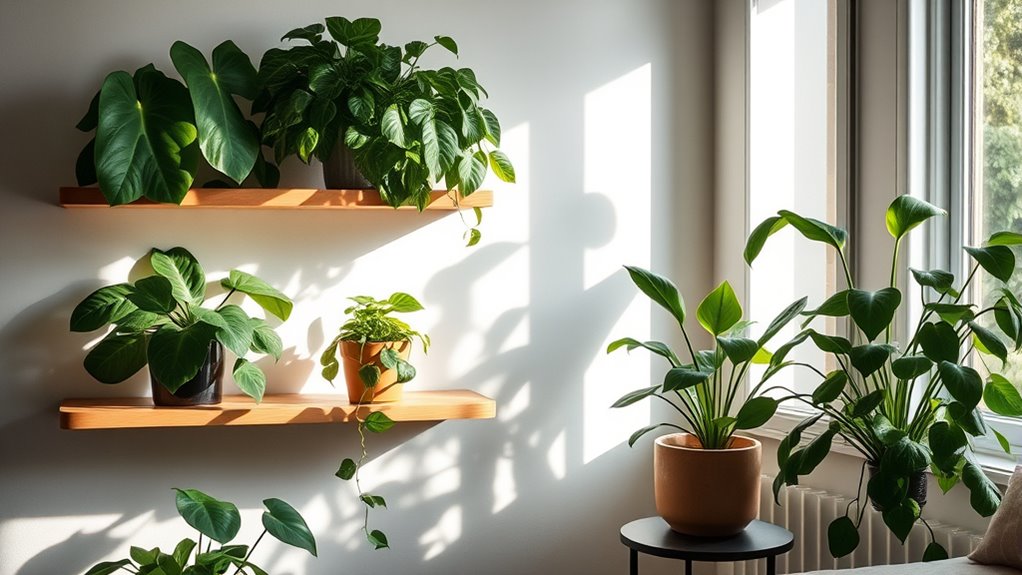
Indoor plants bring life and freshness into your home, creating a calming and inviting atmosphere. When caring for low-light indoor plants, understanding their specific needs is key to keeping them healthy and thriving. One of the most important aspects is establishing a proper watering schedule. Since these plants generally require less water than their sun-loving counterparts, you need to be cautious not to overwater them. Check the soil regularly by sticking your finger about an inch deep; if it feels dry, it’s time to water. If it still feels moist, wait a few more days. Overwatering is one of the leading causes of plant stress and disease, so err on the side of under-watering. Remember, consistent but infrequent watering encourages strong roots and prevents root rot, which can quickly compromise your plant’s health. Using proper soil and containers helps ensure good drainage and reduces the risk of overwatering issues.
Another fundamental part of caring for low-light indoor plants is pest prevention. While these plants are often less prone to pests due to their environment, they’re not entirely immune. Regularly inspecting your plants for signs of pests like spider mites, mealybugs, or scale insects is essential. Look for discolored or sticky leaves, webbing, or tiny insects on the undersides of leaves. Catching issues early makes treatment easier and more effective. To prevent pests, maintain good airflow around your plants and avoid overwatering, which can create a damp environment conducive to pests and diseases. Using clean pots and fresh, well-draining soil also helps prevent infestations. If you notice pests, gently wipe affected leaves with a damp cloth or use an insecticidal soap that’s safe for indoor plants. Consistent pest prevention saves you time and effort down the line, keeping your plants fuss-free and thriving.
Lighting plays a significant role in low-light plant care, but it doesn’t mean you need to place them in complete darkness. Instead, find spots with indirect or filtered light, like near a north-facing window or in a shaded corner. This subtle lighting supports their growth without stressing the plant. Combine this with a tailored watering schedule and vigilant pest prevention, and you’ll create an environment where your low-light indoor plants flourish. Keep in mind, each plant type may have slightly different needs, so learning about their specific preferences will give you the best results. With patience and attentive care, your indoor space can become a lush, green oasis, even with minimal sunlight.
indoor plant watering can with long spout
As an affiliate, we earn on qualifying purchases.
As an affiliate, we earn on qualifying purchases.
Frequently Asked Questions
Can Low-Light Plants Survive in Full Shade Outdoors?
Yes, many low-light plants can survive in full shade outdoors. They typically have high shade tolerance, which makes them suitable for outdoor areas with minimal sunlight. However, you should check each plant’s outdoor suitability because some may prefer slightly more light or specific conditions. Keep in mind that even shade-tolerant plants need some indirect light, so make certain your outdoor space provides the right environment for their health.
How Often Should I Rotate Indoor Plants for Even Growth?
You should rotate your indoor plants every few weeks to promote growth evenness. Regular plant rotation helps guarantee all sides receive equal light exposure, preventing uneven growth or leaning. By changing their position, you allow each part of the plant to get balanced light, which encourages healthy, symmetrical development. Make it a routine to rotate your plants about once every two to four weeks for ideal growth evenness.
Are There Low-Light Plants That Also Purify Indoor Air?
You’ll be glad to know that many air purifying plants also thrive in low light, making them perfect low light greenery. Plants like snake plants, pothos, and peace lilies efficiently filter toxins and need minimal sunlight. Coincidentally, these versatile, easy-care options brighten your space while improving air quality. So, by choosing these low-light indoor plants, you enjoy cleaner air and lush greenery without the hassle of bright sunlight.
What Are Common Pests for Low-Light Indoor Plants?
You should watch for common pests like spider mites, aphids, and mealybugs on your low-light indoor plants. Pest identification is key—look for discolored or sticky leaves and tiny insects. To keep pests at bay, try natural pest control methods such as neem oil or insecticidal soap. Regularly inspect your plants, and act quickly to prevent infestations from spreading and damaging your lush, low-light greenery.
How Can I Tell if My Plant Needs More or Less Water?
You can tell if your plant needs more or less water by observing its watering cues. If the leaves are wilted or soft, it might need more water. Conversely, if you notice yellowing or soggy soil, you’re overwatering. Check the top inch of soil; if it’s dry, water gently. Adjust your watering schedule based on these signs to keep your low-light indoor plant healthy and thriving.
well-draining indoor plant soil mix
As an affiliate, we earn on qualifying purchases.
As an affiliate, we earn on qualifying purchases.
Conclusion
With the right care, your low-light indoor plants can thrive like quiet giants in your home. Think of them as nature’s gentle guardians, bringing life and freshness to even the dimmest corners. Remember, patience and consistent watering are your best tools—they’ll reward you with lush, vibrant greenery that brightens your space. So go ahead, nurture these resilient companions, and watch as they turn your home into a lush oasis, even in the shadows.
indirect light indoor plant grow light
As an affiliate, we earn on qualifying purchases.
As an affiliate, we earn on qualifying purchases.
pest control insecticidal soap for houseplants
As an affiliate, we earn on qualifying purchases.
As an affiliate, we earn on qualifying purchases.