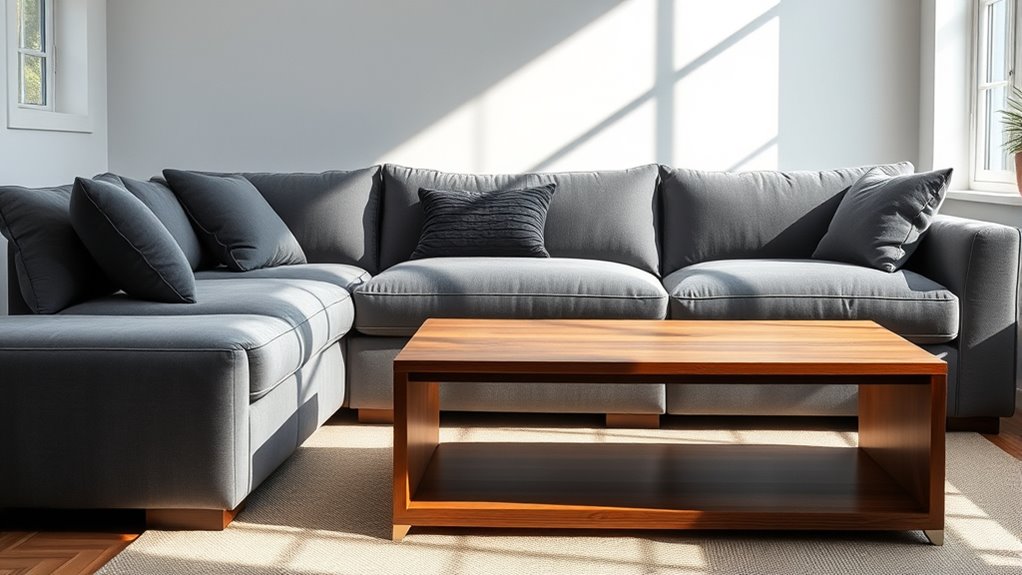

To create a balanced look, your coffee table should be about two-thirds the length of your sofa and sit at or just below its seat height. Material choices like glass or wood should complement your sofa’s texture and style for a cohesive feel. Keep proportions suitable for your room size—avoid oversized tables in smaller spaces. Smartly selecting sizes and finishes helps you craft a stylish, functional space—if you explore further, you’ll discover even more tips to perfect your setup.
Key Takeaways
- The coffee table should be about two-thirds the length of the sofa for balanced proportions.
- Match the coffee table height to or slightly below the sofa seat for comfortable use.
- Choose a table size that complements the room size, avoiding overcrowding in small spaces.
- Select materials that visually harmonize, such as glass with fabric sofas or wood with leather sofas.
- Incorporate accessories proportionally to maintain aesthetic harmony without clutter.

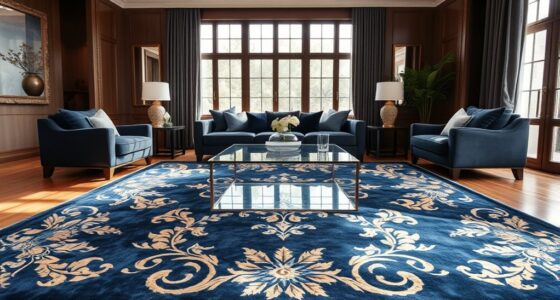
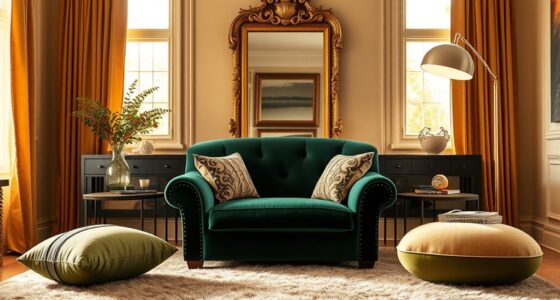
Choosing the right proportions between your sofa and coffee table is essential to creating a balanced and functional living space. When selecting these pieces, you want to focus not only on their size but also on how they work together in terms of material compatibility and visual balance. Material compatibility ensures that your furniture pieces complement each other, creating a cohesive look. For example, pairing a sleek glass coffee table with a plush fabric sofa can evoke modern elegance, while a wooden table paired with a leather sofa offers warmth and classic appeal. Consider the textures and finishes of your furniture, aiming for harmony rather than stark contrast, which can disrupt the room’s flow.
Visual balance is key to making your living space inviting and comfortable. You should aim for a proportionate relationship where the coffee table is neither too small nor too large relative to your sofa. A good rule of thumb is that the coffee table should be approximately two-thirds the length of your sofa. This proportion allows for easy access and prevents the table from overpowering the seating area. Additionally, the height of the coffee table should be roughly equal to or slightly lower than the seat height of your sofa. This creates a seamless look and facilitates comfortable use, whether you’re resting your feet or reaching for a drink.
When considering material compatibility, it’s also important to think about durability and maintenance. If your sofa is fabric, a sturdy wooden or metal coffee table can provide a nice contrast and ease of cleaning. Conversely, if your sofa has a leather upholstery, a glass or marble table can add sophistication and make cleaning spills easier. By matching the material qualities—such as the weight, texture, and finish—you enhance the overall aesthetic, making your living room feel cohesive and thoughtfully designed. Additionally, understanding the typical cost factors associated with furniture pieces can help you make budget-conscious decisions without sacrificing style or functionality.
To achieve the right visual balance, don’t forget to think about the room’s size and layout. If your space is small, avoid oversized coffee tables that crowd the area. Instead, opt for a more compact table that complements the sofa’s proportions without overwhelming it. Conversely, in larger rooms, a substantial coffee table can serve as a focal point, anchoring the seating arrangement. Incorporate accessories like trays, books, or decorative objects on the table to add personality and visual interest, but keep it proportional so it doesn’t look cluttered.
Ultimately, finding the perfect proportions between your sofa and coffee table comes down to selecting pieces that work in harmony through material compatibility and maintaining visual balance. When these elements align, your living room becomes a space that’s both beautiful and functional, inviting relaxation and conversation.

SAVOR LIFE Farmhouse Coffee Table Set of 3,Rustic Wooden Living Room Table Set,Large Coffee/End Side Tables with Open Shelf for Living Room,Walnut
[Farmhouse Meets Modern]:This farmhouse coffee table set 3 features a walnut brown tabletop beautifully paired with a crisp…
As an affiliate, we earn on qualifying purchases.
As an affiliate, we earn on qualifying purchases.
Frequently Asked Questions
How Do Room Size and Shape Influence Proportion Choices?
You should consider room size and shape when choosing proportions, as larger rooms can handle bigger furniture without feeling cramped. Use artificial lighting to highlight proportional balance and create a welcoming atmosphere. Also, select color schemes that complement the space; lighter colors make small rooms feel more spacious, while darker tones add coziness to larger areas. Your goal is to achieve harmony between furniture, lighting, and colors for a balanced look.
What Materials Best Complement Different Sofa and Table Sizes?
Think of your sofa and table as a dance duo; their materials set the rhythm. For larger pieces, opt for plush fabric textures and bold colors to make a statement, while smaller sets benefit from sleek, smooth finishes and neutral tones that won’t overpower. Coordinating fabric textures and color schemes creates harmony, ensuring your furniture complements each other and the room’s vibe, no matter the size or shape.
How Can Adjustable Furniture Improve Proportion Flexibility?
Adjustable furniture enhances proportion flexibility by allowing you to customize your space effortlessly. With modular design, you can reconfigure pieces to suit different room sizes and styles, guaranteeing ideal proportions. Ergonomic considerations ensure comfort and support, making your adjustable furniture both functional and stylish. This adaptability helps you create a balanced, harmonious environment that can evolve with your needs, giving you greater control over your space’s proportions and overall aesthetic.
Are There Universal Proportion Guidelines for Small Spaces?
Yes, there are universal proportion guidelines for small spaces. You should aim for scale harmony by choosing furniture that fits well without overwhelming the room. Visual balance is key, so consider the size of your sofa and coffee table, ensuring they complement each other and the space. Keep proportions appropriate to avoid clutter, and use adjustable furniture to fine-tune the layout for ideal harmony and comfort.
How Do Style Trends Impact Proportion Recommendations?
Style trends influence proportion recommendations by encouraging you to experiment with bold color coordination and lighting effects that can make small spaces feel larger or more dynamic. You should consider current trends, like oversized furniture or minimalist designs, which may alter traditional proportions. Using lighting effects can highlight features and create visual balance, while color choices can expand or contract perceived space, helping you achieve a stylish yet functional environment tailored to evolving trends.

Huuger Narrow Sofa Table with 2 Power Outlets, 110.2-157.5 Inch Adjustable Length, Behind the Couch Table with USB-C Port, Long Entryway Console Table, Anti-tip Kit, for Living Room, Rustic Brown
【Innovative Stepless Adjustable-Length Sofa Table】Unlike fixed-length sofa tables, this extendable entryway console table adjusts smoothly from 110.2 to…
As an affiliate, we earn on qualifying purchases.
As an affiliate, we earn on qualifying purchases.
Conclusion
Remember, choosing the right proportions for your sofa and coffee table creates a balanced, inviting space. Some might think bigger is better, but oversized furniture can overwhelm your room. Trust your instincts—measure carefully and opt for sizes that complement each other. When proportions align, your living area feels harmonious and comfortable. Don’t settle for guesswork; deliberate choices guarantee your space looks polished and feels cozy, making every moment spent there more enjoyable.
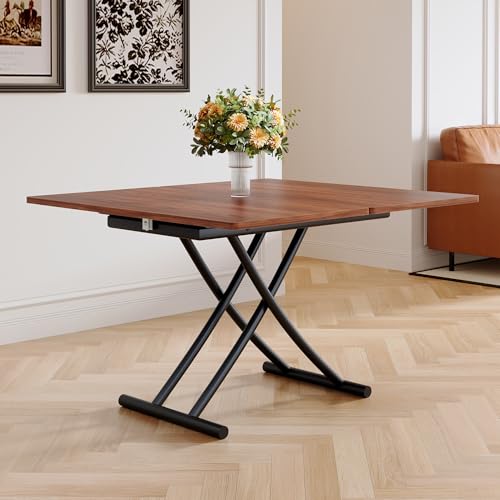
Vohward Adjustable Height Coffee Table to Dining Table, Lift Top Foldable Dining Table with Expandable Top & Wheels, Convertible Coffee Table for Small Spaces & Apartments
MULTIFUNCTIONAL 4 IN 1 DESIGN – This folding dining table transforms effortlessly into a dining table, coffee table,…
As an affiliate, we earn on qualifying purchases.
As an affiliate, we earn on qualifying purchases.

Honyee Morden Coffee Table, 42.5" x 28.5" x 16.1" Triangle Tempered Glass Top for Living Room, Color: Natural Wood
Elegant Design: This coffee table features a sleek, modern design with a tempered glass triangle top and MDF…
As an affiliate, we earn on qualifying purchases.
As an affiliate, we earn on qualifying purchases.