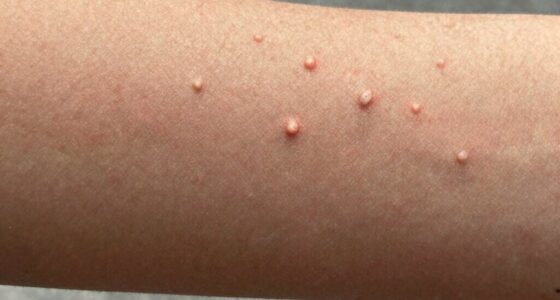

Stretch marks happen when your skin stretches quickly due to growth, weight gain, or pregnancy, and hormonal changes weaken the collagen and elastin that give skin its elasticity. This makes your skin less resilient and more prone to tearing, leaving those streaked scars. Factors like poor nutrition, dehydration, sun exposure, and genetics can speed up this process. To understand how to better prevent and manage stretch marks, keep exploring what science reveals about skin health and resilience.
Get ready for Prime Big Deal Days — try Prime free
Exclusive member deals on October 6–7, plus fast free delivery. Cancel anytime.
As an affiliate, we earn on qualifying purchases.
Key Takeaways
- Stretch marks result from rapid skin stretching due to hormonal fluctuations affecting collagen and elastin production.
- Reduced skin elasticity from aging, genetics, or environmental factors increases susceptibility to stretch marks.
- Hormonal changes impair collagen and elastin synthesis, weakening skin’s structural resilience during growth periods.
- Poor nutrition, dehydration, and UV exposure accelerate collagen and elastin decline, worsening stretch mark formation.
- Maintaining skin health through hydration, nutrition, and avoiding rapid weight changes can help prevent or minimize stretch marks.
Have you ever noticed those thin, streak-like scars on your skin that seem to appear out of nowhere? These are stretch marks, and they often pop up during periods of rapid change in your body. While they might look alarming, understanding what causes them can help you manage and even prevent their appearance. One key factor is the hormonal impact on your skin. During puberty, pregnancy, or sudden weight changes, your hormone levels fluctuate markedly. These hormonal shifts influence your body’s production of collagen and elastin—proteins that give your skin its strength and flexibility. When hormonal levels spike or drop unexpectedly, they can weaken these structural components, making your skin less resilient. This reduced resilience makes your skin more prone to tearing when stretched quickly, leading to stretch marks.
Hormonal changes weaken collagen and elastin, making skin more prone to tears and stretch marks.
Skin elasticity plays an essential role here. Think of your skin as a flexible fabric; the more elastic it is, the better it can stretch without damage. When your skin maintains good elasticity, it can accommodate rapid growth or weight gain without tearing. But if your skin’s elasticity declines—due to genetics, aging, or nutritional deficiencies—it becomes more susceptible to forming scars. That stretch during pregnancy or adolescence can overwhelm less elastic skin, resulting in those characteristic streaks. Essentially, when your skin can’t bounce back after stretching, it leaves behind these marks as a record of the strain.
Your body’s ability to produce collagen and elastin naturally decreases over time, but certain factors accelerate this decline. For example, poor nutrition, dehydration, or exposure to UV rays can weaken skin elasticity further. Hormonal changes can also impair the production of these critical proteins, making your skin less resilient during important growth periods. This interplay between hormones and elasticity is why some people develop stretch marks more readily than others. A family history of stretch marks can indicate a genetic predisposition affecting collagen and elastin production, further influencing how your skin responds to stretching. Additionally, vitamins like C and E play a vital role in supporting collagen synthesis, which can help maintain skin elasticity and resilience.
Understanding the science behind stretch marks reveals that they aren’t simply cosmetic imperfections but signs of your skin’s natural response to physical stress and hormonal fluctuations. While you can’t always prevent them entirely, maintaining good skin health through proper hydration, nutrition rich in vitamins C and E, and avoiding rapid weight changes can help preserve your skin’s elasticity and minimize their appearance. Recognizing the role of hormones and elasticity empowers you to take better care of your skin during those vulnerable periods of growth or change.
As an affiliate, we earn on qualifying purchases.
Frequently Asked Questions
Can Stretch Marks Be Completely Removed?
You can’t completely remove stretch marks, but treatments can markedly improve their appearance. Your genetic predisposition and skin elasticity influence how noticeable they are and how well treatments work. Options like laser therapy, microneedling, and topical creams can reduce their visibility, but some marks may remain. Consistent care and early intervention can help, so it’s best to start treatments when stretch marks first appear for the best results.
Are Certain Skin Types More Prone to Stretch Marks?
You might notice certain skin types are more prone to stretch marks, often due to lower skin elasticity or a genetic predisposition. It’s like discovering a hidden pattern in your skin’s response to changes. If your family has stretch marks, you could be more susceptible. While you can’t change genetics, maintaining healthy skin through hydration and proper care can help, but some factors are simply beyond your control.
Do Stretch Marks Fade Naturally Over Time?
Yes, stretch marks often fade naturally over time as your skin’s elasticity improves and cell turnover speeds up. Genetic factors influence how quickly your skin repairs itself, affecting how noticeable your stretch marks become. While they may lighten and become less prominent, they usually don’t disappear completely. To support fading, keep your skin moisturized and maintain a healthy lifestyle, which helps boost your skin’s healing ability.
What Are the Latest Scientific Treatments for Stretch Marks?
Think of your skin as a canvas, and new treatments as fresh brushes. Laser therapy is one of the latest scientific approaches that can reduce the appearance of stretch marks by stimulating collagen production. Topical treatments, like retinoids and hyaluronic acid, also help improve texture and color. Combining these methods offers the best chance to fade marks over time, giving you a more even, healthier-looking skin surface.
How Do Hormonal Changes Influence Stretch Mark Development?
Hormonal fluctuations can weaken your skin’s elasticity, making it more prone to stretch marks. When hormones like cortisol or estrogen change, they affect collagen production and skin strength. This decreased skin elasticity means your skin can’t easily adapt to rapid growth or weight gain, increasing the likelihood of stretch marks forming. Staying balanced hormonally helps maintain your skin’s resilience, reducing the risk of developing those unwanted marks.
As an affiliate, we earn on qualifying purchases.
Conclusion
So, remember, stretch marks are just scars painted on your skin’s canvas, telling stories of growth and change. While science shows they’re natural and unavoidable, embracing them turns your skin into a vibrant tapestry of life’s journey. Think of them as constellations in your personal night sky—unique, beautiful, and part of what makes you, you. So, stop fighting the stars; instead, admire the universe etched onto your skin.
hydrating body lotions for skin elasticity
As an affiliate, we earn on qualifying purchases.
As an affiliate, we earn on qualifying purchases.
As an affiliate, we earn on qualifying purchases.
NFL season / tailgating Picks
team gear
As an affiliate, we earn on qualifying purchases.