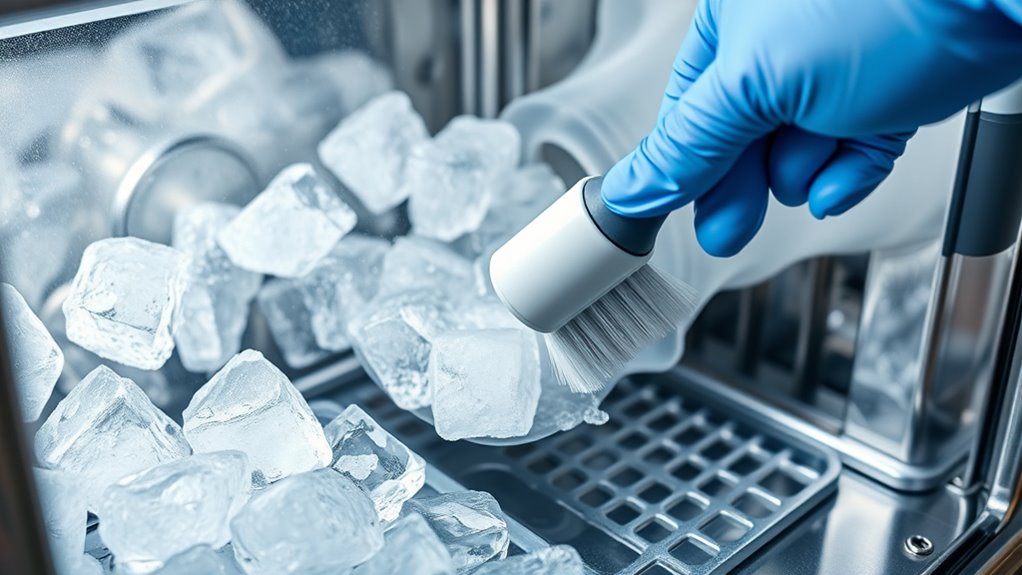

To keep your ice maker running smoothly, regularly clean and descale it using manufacturer-approved solutions. Start by turning off the machine, emptying existing ice, and applying a descaling agent to remove mineral buildup. Make sure to follow the instructions carefully to avoid damaging internal parts. Also, use filtered water to reduce future deposits. Staying on top of these steps will boost ice quality and prolong your machine’s lifespan—continue with these tips to learn more.
Key Takeaways
- Use filtered or purified water to prevent mineral buildup and ensure clear, good-tasting ice.
- Turn off the machine, empty existing ice, and run a descaling solution as per manufacturer instructions.
- Regularly inspect and replace water filters and internal components to maintain efficiency.
- Schedule descaling every few months to remove mineral deposits and avoid internal damage.
- Maintain high water quality and clean the machine periodically for optimal performance and longevity.
Maintaining your ice maker is essential to guarantee it produces clean, fresh ice and runs efficiently. One of the most crucial aspects of upkeep involves ensuring the water quality supplied to your machine is ideal. If your water contains high levels of minerals, sediment, or contaminants, it can lead to cloudy, off-flavor ice and increase the buildup of mineral deposits inside the machine. To prevent this, consider using filtered or purified water, which helps keep the internal components cleaner for longer and improves the overall quality of your ice. Regularly checking the water supply and replacing filters as recommended by the manufacturer not only enhances water quality but also reduces the need for frequent component replacement down the line.
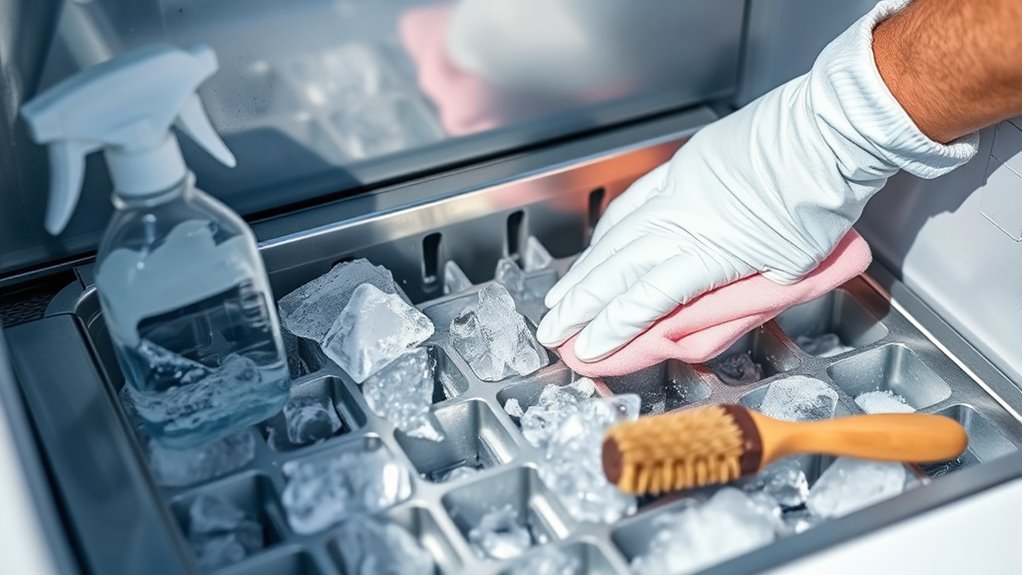
Cleaning and descaling your ice maker should be a regular part of your maintenance routine. Over time, mineral deposits from hard water accumulate inside the machine, especially on the evaporator and water delivery components. This buildup can impair the machine’s efficiency, cause ice to form unevenly, and even lead to component failure. To avoid these issues, run a descaling solution through your ice maker every few months. This process involves turning off the machine, emptying any existing ice, and then using a mixture of water and a descaling agent to flush out mineral deposits. Be sure to follow the manufacturer’s instructions carefully to guarantee complete removal of scale without damaging internal parts. Additionally, using appropriate descaling agents can help effectively remove mineral buildup without harming your machine’s internal components.
In addition to cleaning, you need to pay attention to the internal components that may require replacement over time. Components like water filters, inlet valves, and sensors can wear out or become clogged, affecting the overall performance of your ice maker. When you notice issues such as slow ice production, strange noises, or poor ice quality, it might be time to replace these parts. Regular inspection helps catch problems early, preventing costly repairs and ensuring your ice maker continues to function effectively. Keep spare parts handy, especially filters and valves, and always use manufacturer-approved replacements for the best results.

ACTIVE Ice Machine Cleaner Maker Descaler – 32 fl oz (8 Uses) Nickel Safe Ice Maker Cleaner Solution – Compatible with Whirlpool 4396808, Scotsman,Manitowoc,Hoshizaki, GE Opal Cleaning Kit – USA Made
8 Uses Values-Size Bottle: Compare to a 4 pack from other brands! With recommended 4oz per cleaning, you're…
As an affiliate, we earn on qualifying purchases.
As an affiliate, we earn on qualifying purchases.
Frequently Asked Questions
How Often Should I Replace My Ice Maker’s Water Filter?
You should replace your water filter every 6 months for ideal water quality. Regular water filter replacement helps prevent buildup and guarantees clear, fresh ice. Depending on your water quality and usage, you might need to do it more often. Also, follow the descaling frequency recommended by your ice maker’s manufacturer to avoid mineral buildup. Staying consistent with these maintenance steps keeps your ice maker functioning smoothly and provides the best ice.
Can I Use Vinegar to Descale My Ice Maker?
You can use vinegar cleaning to descale your ice maker, but it’s not always the best option. Vinegar is a natural descaling solution, effective for removing mineral buildup, but it may leave an odor or taste. For better results, consider using a commercial descaling solution designed specifically for ice makers. Follow the manufacturer’s instructions, and always rinse thoroughly afterward to guarantee your ice stays clean and fresh.
What Are Signs My Ice Maker Needs Professional Repair?
You might think DIY fixes work, but signs like persistent ice production issues, strange noises, or foul odors indicate your ice maker needs professional repair. Don’t overlook these symptoms, as delaying can worsen problems and increase repair costs. During ice maker troubleshooting, repair cost estimates vary, but early diagnosis saves money. If your unit isn’t functioning despite simple cleaning, call in an expert to prevent further damage and ensure safe, clean ice.
Is It Safe to Use Commercial Cleaning Products on My Ice Maker?
Using commercial cleaning products on your ice maker can be safe if you choose ones specifically designed for ice machines. Always read the label carefully and follow the manufacturer’s instructions to guarantee ice maker safety. Avoid harsh chemicals not meant for food contact surfaces, as they can contaminate the ice. Properly rinsing after cleaning is essential to prevent any chemical residue, maintaining both safety and the quality of your ice.
How Do I Prevent Mold Growth in My Ice Maker?
To prevent mold growth in your ice maker, you must prioritize hygiene practices and mold prevention. Regularly clean and sanitize all parts, especially the ice bin and water reservoir. Keep the area dry and well-ventilated, and change water filters as recommended. By staying consistent with these routines, you’ll create an environment inhospitable to mold, ensuring fresh, safe ice every time. Your commitment keeps your ice maker clean and healthy.

AQUA CREST INL 5 Years Inline Water Filter for Ice Maker with 1/4-Inch Direct Connect Fittings, Idea for Ice Maker, Refrigerator, RV, Inline Refrigerator Water Filter Reduces Chlorine, Taste& Odor
【Multiple uses】The AQUACREST Inline Water Filter can be used in Refrigerators, Ice Makers, Coffee Makers, Drinking Water Fountains,…
As an affiliate, we earn on qualifying purchases.
As an affiliate, we earn on qualifying purchases.
Conclusion
Keeping your ice maker clean and descaled might seem tedious, but it’s worth it for crystal-clear ice and trouble-free operation. Don’t worry if it feels like a chore—you’ll save money on repairs and enjoy fresh, tasty ice every time. Just set a simple schedule, and soon it’ll become second nature. Stay consistent, and your ice maker will serve you well for years to come. Trust us, a little effort now prevents bigger issues later!
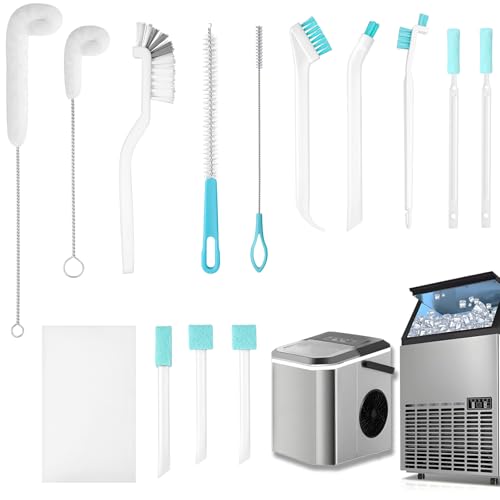
Potanro Ice Machine Cleaner Brush Sets, 14pcs Countertop Ice Maker Cleaner Tools, Gap Crevice Cleaning Brushes Tools Small Spaces, Scrub Sponge, Thin Brush for Cleaning Window Track, Straw, Bottle
【Complete 14 Piece Set for Every Task】Includes specialized brushes, duct cleaning brushes and crevice brushes for ice makers….
As an affiliate, we earn on qualifying purchases.
As an affiliate, we earn on qualifying purchases.

242252603 Refrigerator Ice Maker Water Inlet Valve, for Frigidaire kenmore Electrolux Icemaker Solenoid Valves, Replacement parts AP5671756 241803703 241803701 218475600 218720400 240380301 etc
【 Replacement parts number 】242252603 Refrigerator ice maker water inlet valve, for Frigidaire Kenmore Electrolux icemaker solenoid valves,…
As an affiliate, we earn on qualifying purchases.
As an affiliate, we earn on qualifying purchases.