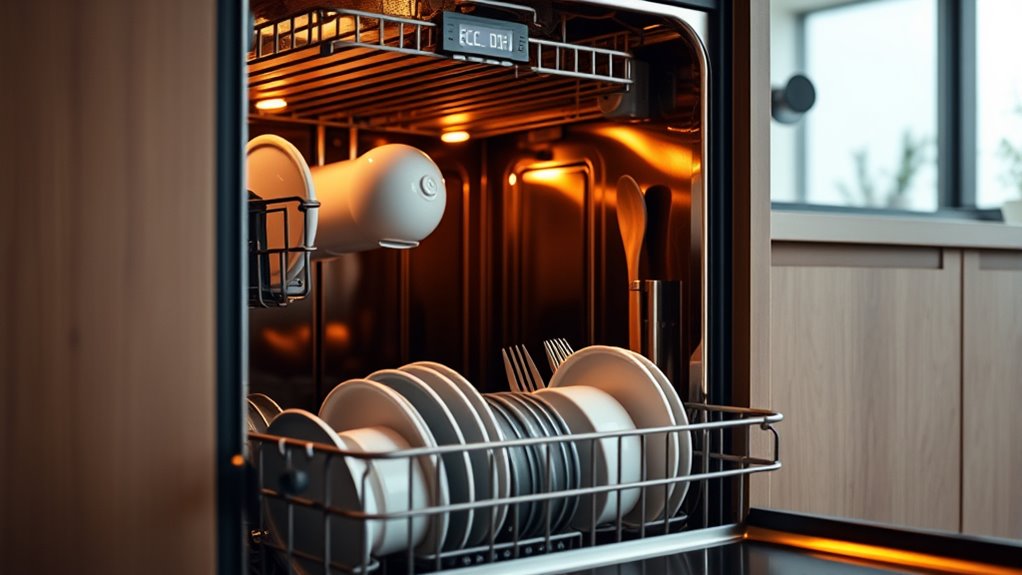

Choosing the right dishwasher cycle like Eco, Auto, or Heavy can help you clean effectively while saving water and energy. Eco mode is perfect for lightly soiled dishes and cuts utility bills, while Auto adjusts based on how dirty your load is, preventing overuse of resources. Heavy is best for heavily soiled items, ensuring thorough cleaning. Understanding how each cycle works can optimize your dishwasher use, and there’s more to discover about making your load even more efficient.
Key Takeaways
- Eco cycle uses lower water temperatures and longer wash times for energy-efficient, environmentally friendly dish cleaning.
- Auto cycle detects soil level with sensors to automatically adjust water temperature, pressure, and cycle length.
- Heavy cycle is designed for heavily soiled dishes, providing more intense cleaning with higher water and energy use.
- Customizable cycles allow adjustment of rinse duration and drying options to optimize cleaning and resource savings.
- Selecting the appropriate cycle ensures thorough cleaning, conserves water and energy, and reduces utility costs.
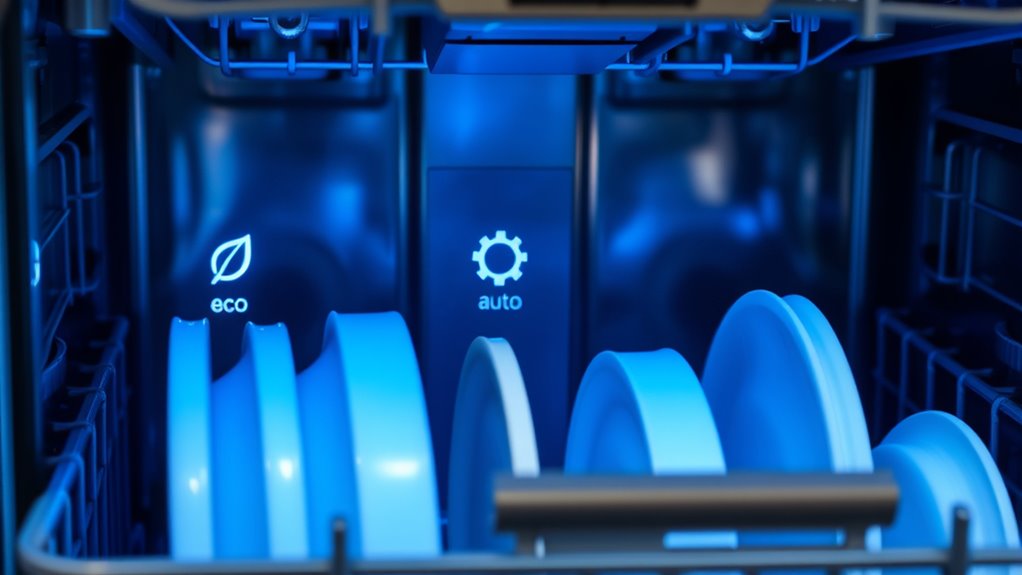
Understanding the different dishwasher cycles can help you choose the right setting for your dishes and conserve energy. When you select an appropriate cycle, you not only ensure your dishes come out spotless but also maximize energy efficiency and reduce water usage. Many dishwashers offer cycle customization options, allowing you to tailor the wash to your specific needs. This flexibility means you can avoid running full cycles when you only have a few items, saving both time and resources.
Choosing the right dishwasher cycle saves energy, water, and time while ensuring spotless dishes.
The eco cycle is designed with energy efficiency in mind. It uses lower water temperatures and longer wash times to clean effectively while consuming less power. If your dishes aren’t heavily soiled, this cycle is perfect. It’s especially useful for everyday loads of lightly soiled plates, glasses, and utensils. Choosing the eco cycle whenever possible helps reduce your household’s environmental impact and lowers your utility bills. Since you can often customize parameters like rinse duration or drying options, you can further fine-tune this cycle for *maximum* energy savings without compromising cleanliness. Energy-efficient dishwasher cycles are becoming increasingly popular as consumers seek sustainable home appliances.
The auto cycle offers a versatile solution that adapts to the level of soil on your dishes. It uses sensors to detect how dirty the load is and adjusts water temperature, pressure, and cycle duration accordingly. This cycle is ideal when you’re unsure of the soil level or when you want a convenient, hands-off approach. Auto cycles enhance energy efficiency by preventing over-washing; they only use what’s necessary. With cycle customization, you might be able to set preferences for dryness or additional rinses, ensuring your dishes meet your standards while conserving resources. This adaptability makes the auto cycle a popular choice for busy households that need reliable cleaning without wasting energy or water.

Eco-Gals Dishwasher Cleaner – 12 Tablets – 12 Month Supply – Unscented
- Foaming Action: Eco-Scrubz unique foaming formula
- Eco-Friendly: Protects the Earth while cleaning
- 12-Month Supply: A year's worth of tablets
As an affiliate, we earn on qualifying purchases.
As an affiliate, we earn on qualifying purchases.
Frequently Asked Questions
Can I Switch Cycles Mid-Wash?
Yes, you can usually switch cycles mid-wash with most dishwashers. Simply open the door carefully, pause the cycle if needed, and select a different cycle for your needs. Keep in mind that some models allow for cycle switching and mid-wash adjustments, but others may not. Always check your dishwasher’s manual for specific instructions. Just be gentle to avoid disrupting the wash or causing leaks.
How Do I Adjust Cycle Duration?
To adjust the cycle duration, you typically select a cycle like Eco, Auto, or Heavy, then use the cycle customization options on your dishwasher. You can often extend or shorten the cycle to enhance energy savings or better suit your needs. Check your dishwasher’s control panel or user manual for specific instructions, as options vary by model. This customization helps optimize performance and conserve energy during your wash.
What Cycle Is Best for Delicate Dishes?
Like a delicate dance, your best move is selecting the delicate cycle for fragile dishes. This cycle, often called a gentle wash, is designed to handle fine china and glassware with care. It reduces water pressure and temperature, preventing damage. Using this cycle guarantees your delicate dishes come out pristine and intact, allowing you to protect your cherished items while keeping your dishwasher running smoothly and efficiently.
Are There Hidden Costs for Eco Cycles?
Yes, eco cycles can have hidden costs, but they mainly revolve around energy savings and water consumption. While they use less power and water, they might take longer, potentially increasing electricity use if your electricity rate is high. Also, some eco cycles may not clean thoroughly, leading to the need for rewashing, which adds to water and energy costs. Overall, they save money but consider your specific needs.
How Do I Troubleshoot Cycle Errors?
Did you know that nearly 60% of dishwasher issues stem from simple errors? To troubleshoot cycle errors, first check the error codes displayed on your machine. Use your user manual to interpret these codes and follow recommended troubleshooting methods like cleaning filters, inspecting door latches, or resetting the machine. If problems persist, consider calling a technician to avoid further damage and guarantee your dishwasher runs smoothly again.

WD21X25468 Dishwasher Pressure Sensor Replacement-for GE/for Hotpoint/for Haier- Replaces AP6976524, 37640602, 4962334, PS1274125
- Compatible Brands: GE, Hotpoint, Haier, RCA, Kenmore
- High-Quality Materials: Durable and thoroughly tested for longevity
- Effective Repair Solution: Fixes draining issues and error codes
As an affiliate, we earn on qualifying purchases.
As an affiliate, we earn on qualifying purchases.
Conclusion
Think of choosing a dishwasher cycle like picking the right gear for a bike ride—each one helps you go further with less effort. Once, I used the eco cycle on my dishwasher and saved enough water to fill a small bucket, all while keeping my dishes sparkling. Picking the right cycle isn’t just about convenience; it’s about making smarter choices that benefit your wallet and the planet. So, select wisely and enjoy a cleaner, greener home.

Frigidaire GDSH4715A Gallery 24 Inch Wide 14 Place Setting Built-In Top Control Dishwasher with 5 Wash Cycles and MaxBoost Dry™ – Stainless Steel
- Energy Efficient: Uses 3.2 gallons per cycle
- Energy Star Certified: Low energy consumption
- Multiple Wash Cycles: 7 versatile options including Sanitize
As an affiliate, we earn on qualifying purchases.
As an affiliate, we earn on qualifying purchases.

GE Appliances WD21X23462 Dishwasher User Interface
- Compatible with GE dishwashers: User interface for GE dishwashers
- Displays settings and cycle options: Shows dishwasher settings and cycle selection
- Installation precautions: Disconnect power and wear gloves before installation
As an affiliate, we earn on qualifying purchases.
As an affiliate, we earn on qualifying purchases.