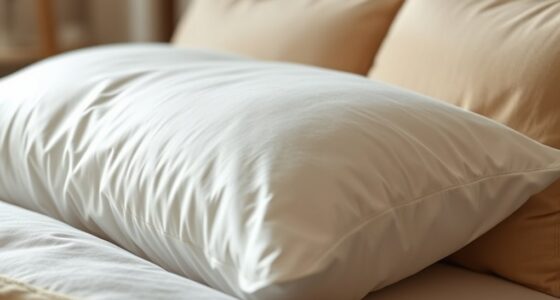
Down fills bedding with natural goose or duck feathers, offering superior softness and excellent insulation, ideal for colder nights. Down alternative uses synthetic fibers to mimic that plush feel and provides hypoallergenic benefits, making it suitable if you’re sensitive or want easier maintenance. While down offers luxury and warmth, down alternative is more affordable and allergy-friendly. Want to discover which option suits your needs best? Keep exploring to find out the differences in comfort, care, and cost.

Get your next haul delivered free — and shop member deals
- Fast, free delivery on millions of items
- Access to Prime Big Deal Days deals on October 6–7
- Prime Video, Amazon Music and more included
Key Takeaways
- Down offers superior softness, plushness, and insulation, making it ideal for warmth and a luxurious feel.
- Down alternatives are hypoallergenic, easier to clean, and resistant to mold and dust mites.
- Down provides better natural insulation but can trap moisture, while down alternatives manage moisture more effectively.
- High-quality down tends to be more expensive, whereas down alternatives are more affordable and budget-friendly.
- Choice depends on preferences for natural luxury versus allergy-friendly, low-maintenance bedding options.
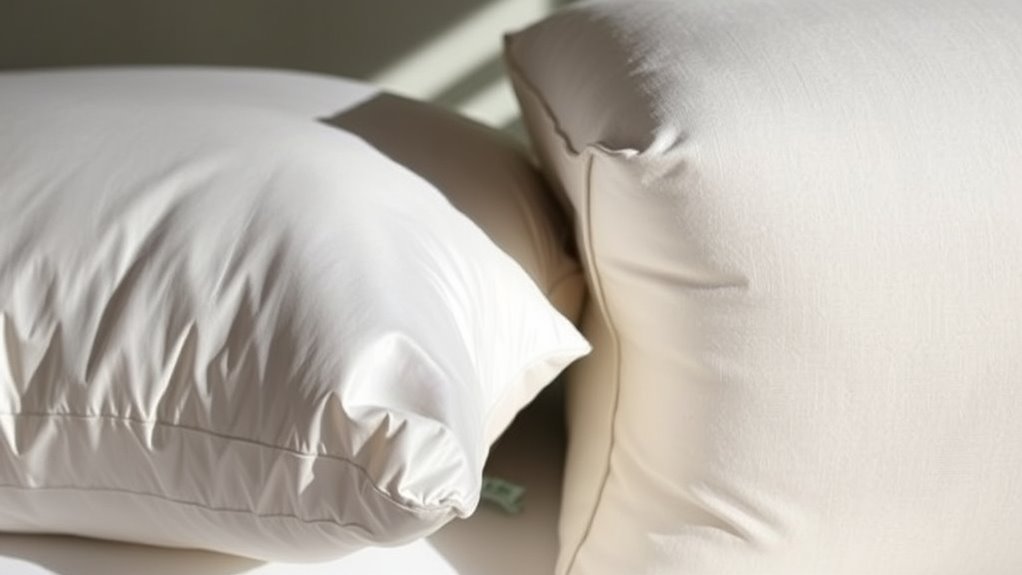
Are down and down alternative bedding really different, or are they just different names for similar products? The answer depends on what you’re looking for in your bedding. Down, typically sourced from geese or ducks, offers unmatched feather softness that makes it feel luxurious and plush. When you sink into down-filled bedding, you notice how light and airy it is, providing a cozy, cloud-like experience. Its natural fill power allows it to trap warm air, making it an excellent insulator for colder nights. However,, despite its softness and warmth, down isn’t for everyone. Its natural properties can pose problems for allergy sufferers, which is where down alternative options come into play.
Down offers luxurious softness and warmth, but down alternatives provide allergy-friendly, easy-care comfort.
Down alternative bedding is designed to mimic the feather softness of traditional down while offering hypoallergenic benefits. These products are usually filled with synthetic fibers such as polyester, which are engineered to feel soft and similar to real feathers. The feather softness of down alternatives has improved over the years, and many brands now produce fills that are remarkably similar to natural down. But the key advantage remains their hypoallergenic benefits. If you’re sensitive to dust mites, pet dander, or pollen, down alternatives provide a safer choice. They resist common allergens and don’t require the same level of maintenance as natural down, which can harbor dust mites if not properly cleaned.
One of the main distinctions between the two is how they handle moisture and cleanliness. Down bedding tends to trap moisture more easily, which can lead to mustiness or a need for more frequent cleaning. Down alternative bedding, on the other hand, is generally more resistant to mold and bacterial growth because of its synthetic nature. It’s also easier to wash and dry, often needing less careful handling. If you want the feather softness of down but have allergy concerns or prefer a low-maintenance option, down alternative bedding can deliver that luxurious feel without the drawbacks.
Cost is another factor to weigh. Down bedding, especially high-quality pieces, tends to be pricier because of the natural materials and labor involved. Down alternatives are usually more affordable and offer a good compromise for those wanting a plush, comfortable sleep without breaking the bank. Ultimately, your choice hinges on your personal priorities: if you crave natural, super-soft fill and don’t have allergies, down might be your best bet. If allergy resistance, easier care, and affordability are more important, then down alternative bedding offers a compelling solution.
down alternative comforter queen size
As an affiliate, we earn on qualifying purchases.
As an affiliate, we earn on qualifying purchases.
Frequently Asked Questions
Which Fill Type Is More Environmentally Sustainable?
You’ll find that down alternative fills are generally more eco-friendly because they often use recycled materials and synthetic fibers, reducing environmental impact. Down, on the other hand, relies on natural duck or goose feathers, which can raise concerns about animal welfare and sustainable sourcing practices. For a more sustainable choice, look for products that prioritize eco friendliness comparison and transparent sourcing practices, ensuring your comfort doesn’t come at the environment’s expense.
How Do Hypoallergenic Properties Differ Between Down and Alternative Fills?
You’ll find that down alternative fills generally offer better hypoallergenic properties compared to natural down, making them a better choice if allergy concerns are a priority. Down can harbor dust mites and allergens, causing issues for sensitive sleepers. In a hypoallergenic comparison, synthetic fills are designed to resist allergens and bacteria, providing a safer, more comfortable option for allergy sufferers. Always check product labels to verify they’re specifically designed for allergy concerns.
Can Down or Down Alternative Insulate Effectively in Extreme Cold?
They say “don’t judge a book by its cover,” but in extreme cold, you’ll want to look beyond just the cover. Down insulates effectively with superior cold insulation and high fill durability, keeping you warmer for longer. Down alternative can also offer decent insulation, but it usually doesn’t match the performance of down in harsh conditions. For ultimate warmth, choose down, especially if you need reliable cold insulation and long-lasting fill durability.
Are There Health Concerns Associated With Down or Synthetic Fills?
You might have allergy considerations with down, as it can trigger sensitivities if you’re allergic to feathers. Synthetic fills like down alternative are hypoallergenic, making them a better choice for allergy sufferers. Also, consider animal welfare, since down involves feathers from live-plucking or force-feeding, which raises ethical concerns. If animal welfare is important to you, down alternative provides an ethical, hypoallergenic option without sacrificing warmth.
How Do Maintenance and Cleaning Differ for Each Fill Type?
Did you know that synthetic fills resist stains better than natural down? Your care routine differs for each: for down, you should regularly fluff and spot clean stains promptly to maintain loft and prevent allergen buildup, while synthetic fills are easier to wash thoroughly. For longevity tips, always use gentle cycles and low heat, and guarantee thorough drying. Proper maintenance helps keep both fills fresh and prolongs their lifespan.
hypoallergenic down feather pillows
As an affiliate, we earn on qualifying purchases.
As an affiliate, we earn on qualifying purchases.
Conclusion
Choosing between down and down alternative is like picking the perfect pillow—each offers comfort, but for different needs. Imagine finding a pillow that keeps you cozy on cold nights, just like down, but also stays allergy-friendly, like down alternative. Remember, the right fill should feel like a warm hug, tailored to your preferences. So, weigh your priorities carefully—after all, your sleep comfort is worth it, just like finding the perfect pillow for a restful night.
synthetic fiber duvet insert king
As an affiliate, we earn on qualifying purchases.
As an affiliate, we earn on qualifying purchases.
As an affiliate, we earn on qualifying purchases.
Halloween Picks
halloween
As an affiliate, we earn on qualifying purchases.