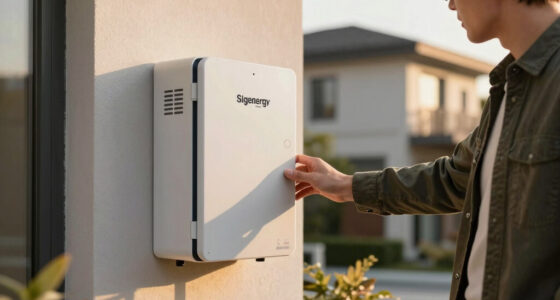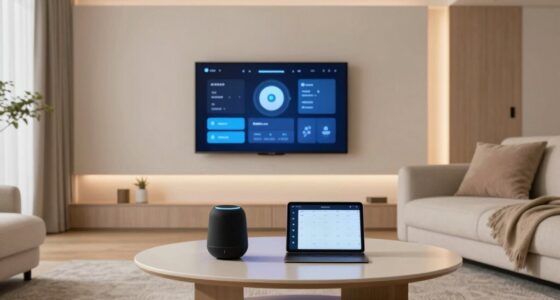
Presence detection uses your smartphones, sensors, and Wi-Fi signals to automatically recognize when you’re nearby. Your devices and sensors work together to track your location and movements, enabling your home or office to respond instantly. This technology makes automation seamless, adjusting lighting, temperature, or security without manual input. As these systems become smarter, your environment will adapt more intuitively. Keep exploring to discover how these innovations can transform your daily spaces.
Key Takeaways
- Presence detection combines smartphone signals, like Wi-Fi and Bluetooth, with sensors such as motion or infrared to identify occupancy accurately.
- Smartphones serve as reliable presence markers by leveraging their unique identifiers and connection to local networks.
- Sensor integration enhances detection accuracy by monitoring movement and environmental cues within a space.
- Automated responses, like adjusting lighting or climate, are triggered based on detected presence or absence.
- Advances in sensor and tracking technologies aim to create smarter, more responsive environments with increased energy efficiency.
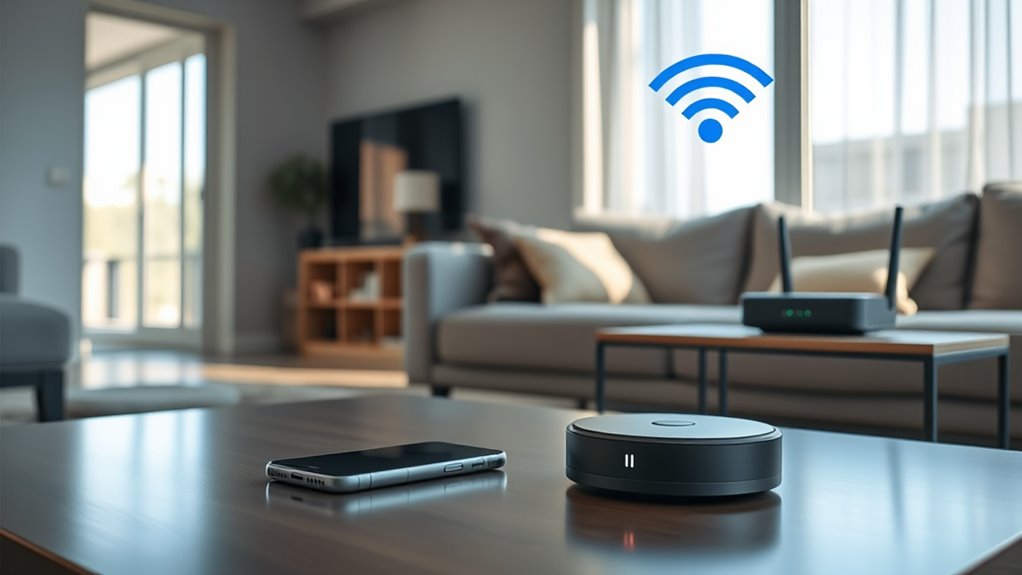
Have you ever wondered how devices automatically turn on lights or adjust settings when you enter a room? The answer lies in the fascinating world of presence detection, which combines smartphone tracking and sensor integration to create seamless experiences. When you walk into a space, your smartphone’s signals and various sensors work together behind the scenes to identify your presence almost instantly, triggering the right responses without any manual input. This technology is transforming how homes, offices, and public spaces operate, making them more intuitive and energy-efficient.
Smartphone tracking plays a key role in presence detection. Your phone constantly communicates with nearby Wi-Fi networks, Bluetooth beacons, or even dedicated sensors embedded in the environment. These signals help systems determine if you are present, where you are, and sometimes even how long you’ve been there. Because smartphones are carried everywhere, they serve as reliable markers of your presence. When your device connects to a Wi-Fi network or detects Bluetooth signals, the system recognizes your device’s unique identifiers, confirming your presence in a room. This method is efficient, as it leverages existing technology most people carry daily, reducing the need for additional hardware.
Sensor integration further enhances presence detection by adding layers of accuracy and responsiveness. Motion sensors, infrared detectors, and ultrasonic sensors continuously monitor activity within a space. When movement is detected, the system can confirm whether someone is present or if a room has been vacated. Combining sensor data with smartphone tracking allows for a robust detection mechanism. For example, if your phone isn’t detected but sensors notice movement, the system recognizes someone is in the room. Conversely, if sensors show no activity but your phone is nearby, it might update the system to keep the lighting or climate settings adjusted based on your habits. Additionally, advances in sensor technology are making detection even more precise and reliable.
This integration creates a smarter environment where devices respond dynamically to your presence. Lights can turn on when you enter a room, and the temperature can be adjusted to your preferred comfort level. When you leave, sensors and smartphone tracking work together to detect your absence, prompting devices to switch off or go into energy-saving modes. The synergy between these technologies minimizes manual control and maximizes convenience. It’s like having a space that knows what you need before you even ask for it, making your daily routines smoother.
Ultimately, presence detection powered by smartphone tracking and sensor integration is reshaping how you interact with your environment. It’s not just about automation; it’s about creating spaces that adapt intuitively to your presence, enhancing comfort and efficiency. As these technologies continue to evolve, expect smarter homes and workplaces where your devices respond seamlessly to your presence, making everyday life more effortless and connected.
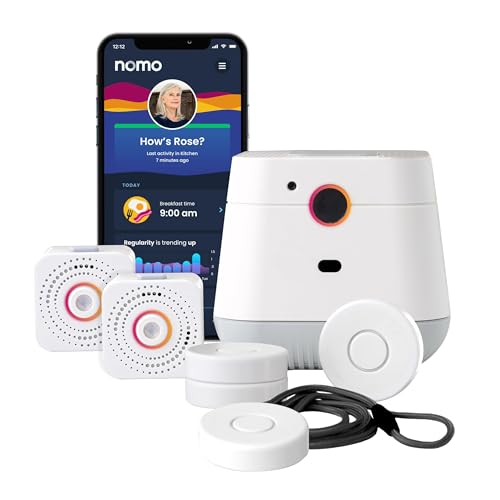
NOMO Smart Care Medical Alert System, Fall Detection for Seniors, WiFi in Home Monitoring Safety System, Emergency Call Button, Custom Fall Alert, Virtual Caregiver, 60-Day Trial, Monthly Subscription
NOMO SMART CARE ESSENTIAL KIT – A complete in-home monitoring safety system featuring a Smart Hub, two motion…
As an affiliate, we earn on qualifying purchases.
As an affiliate, we earn on qualifying purchases.
Frequently Asked Questions
How Accurate Are Wi-Fi-Based Presence Detection Methods?
Wi-Fi-based presence detection methods can be quite accurate, but their reliability varies. You might find that combining Wi-Fi signals with motion sensors improves accuracy, as sensors detect movement directly. Facial recognition adds another layer, especially indoors. However, Wi-Fi signals can be affected by walls or interference, so don’t rely solely on them. For best results, use a mix of Wi-Fi, motion sensors, and facial recognition for precise detection.
What Are the Privacy Concerns With Sensor-Based Presence Detection?
Picture your home quietly sensing your presence, but that comes with privacy concerns. You might worry about how your data is handled, even if it’s encrypted. Sensor-based detection raises questions about transparency—you need clear user consent to prevent misuse. Confirm data encryption is strong, and you’re fully aware of what information’s collected. Protecting your privacy means understanding how sensors track you and trusting that your data stays secure.
Can Presence Detection Work in Crowded or Multi-User Environments?
Yes, presence detection can work in crowded environments and with multi-user detection, but it’s more challenging. You need advanced sensors and algorithms to distinguish individual users accurately. In crowded settings, overlapping signals and multiple devices can cause false positives or missed detections. To improve accuracy, you might combine different methods like sensors, Wi-Fi signals, and machine learning, ensuring the system adapts to complex environments effectively.
How Does Device Battery Life Impact Presence Detection Reliability?
Your device’s battery life can considerably impact presence detection reliability. If your device consumes too much battery, it may reduce the frequency of updates, leading to less accurate detection. Conversely, optimizing battery consumption improves device longevity and ensures consistent data collection. To maintain reliable presence detection, guarantee your device balances efficient battery usage with the need for regular updates, avoiding premature shutdowns or power-saving modes that hinder detection accuracy.
What Are the Best Practices for Integrating Sensors With Smart Home Systems?
To integrate sensors effectively with your smart home system, start by ensuring proper sensor calibration for accurate detection. Focus on system interoperability by choosing compatible devices and protocols, like Zigbee or Z-Wave. Regularly update firmware and test sensor performance to prevent false triggers. Keep your system streamlined by centralizing control, and consider automation rules that adapt to sensor data for seamless, reliable home automation.

GoveeLife Human Presence Sensor, 2.4 GHz Wi-Fi Required, Smart mmWave Radar & PIR Wired Motion Sensor, Zone Positioning, Multi-Person Detection, Support Alexa & Google Home, for Indoor Home Automation
Ultra-High Accuracy Presence Detection: Presence Sensor utilizes mmWave radar and infrared technology to detect human movement and static…
As an affiliate, we earn on qualifying purchases.
As an affiliate, we earn on qualifying purchases.
Conclusion
Now that you know how phones, sensors, and Wi-Fi can detect presence, imagine the possibilities ahead. Could this technology someday unlock your home just as you approach? Or secretly monitor your daily routines? The potential is exciting—but also raises questions you haven’t yet considered. Stay tuned, because what’s coming next might change how you experience your space forever. Are you ready to see what’s just around the corner?

Panic Button for Personal Safety – Silent Beacon Bluetooth Emergency Alert with 2-Way Calls, Text & Email. Speaker & Mic, Wearable Rechargeable, Key Finder, 5 Modes – for Workers, Families, Offices.
Calls Any Phone Number Including 911: Our panic button allows you to choose which phone number you want…
As an affiliate, we earn on qualifying purchases.
As an affiliate, we earn on qualifying purchases.

Hortsun 6 Pieces DC 5V-24V 5A PIR Motion Activated Sensor Light Switch Occupancy Motion Sensor with DC Coupler Cable for Party LED Strip Light
Pir Sensor Detection: the sensor function of this black occupancy sensor light switch is triggered by motion, which…
As an affiliate, we earn on qualifying purchases.
As an affiliate, we earn on qualifying purchases.